At the western end of the Pyrenees, where the mountains meet the Atlantic, lies a region that ignores the border running through it. The Basque Country stretches across France and Spain, with its own language, its own flag and a culture proudly shared on both sides.
In a single trip, you can surf in Biarritz in the morning, walk through a village hung with red peppers at lunchtime and end the day with pintxos in San Sebastián. This guide covers the essentials of the French and Spanish Basque Country: the towns not to miss, what to eat and drink, the best time to go and how to explore both sides with ease.
The Basque Country: one region, two countries
Seven provinces, one language, two sides of the Pyrenees
Basques traditionally speak of seven provinces: three in France (Labourd, Lower Navarre and Soule) and four in Spain (Gipuzkoa, Biscay, Álava and Navarre). Their language, Euskara, is unrelated to any other language in Europe, and you will see it on road signs, shop fronts and menus.
The French side, often called the Pays Basque, combines elegant seaside towns with green hills and white-and-red villages. The Spanish side, Euskadi, adds two cities with a strong personality, San Sebastián and Bilbao, and one of the most famous food scenes in the world.
The French Basque Country
Ocean towns, green hills and red-and-white villages
Biarritz, between surf and elegance
Biarritz is the most famous town on the French Basque coast. In the 19th century, Empress Eugénie made it a fashionable resort, and the seafront still shows that Belle Époque elegance.
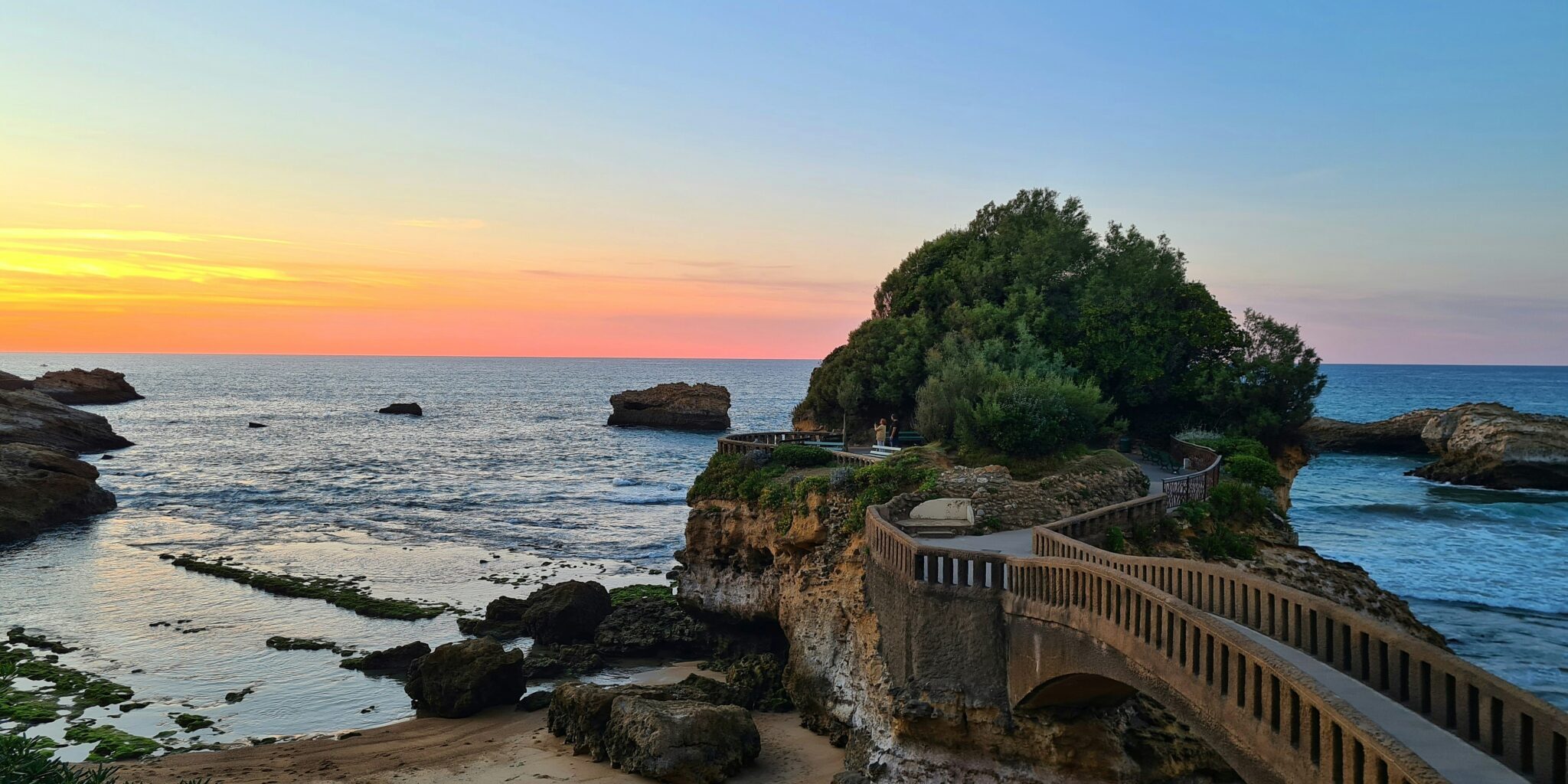
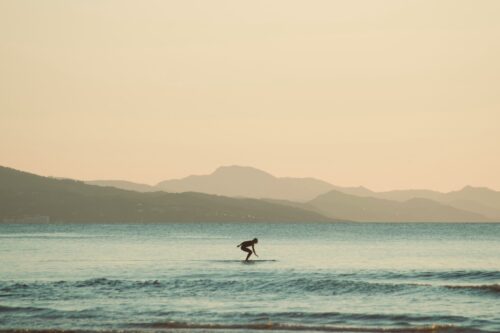
Start at the Grande Plage, the main beach in the town center, then follow the coastal path to the Rocher de la Vierge, a rock topped with a statue of the Virgin and linked to the shore by a small footbridge. For the best panorama, climb to the lighthouse at Pointe Saint-Martin. Biarritz is also a cradle of surfing in Europe: beginners can take a lesson on the Côte des Basques beach, where the waves are often gentle and the view over the coast is superb. Along the way, stop at the old fishermen’s port, the Aquarium de Biarritz or the Asiatica museum.
Love waves? Discover the best surfing destinations in France.
Saint-Jean-de-Luz, the harbor of kings
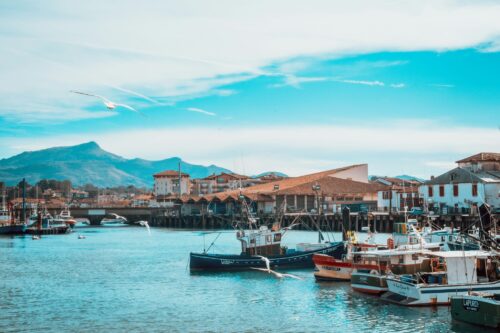
South of Biarritz, Saint-Jean-de-Luz and Ciboure face each other across a sheltered bay. Fishing boats still unload in the harbor, and the streets of the old town are lined with Basque houses with red or green shutters.
In 1660, King Louis XIV married Maria Theresa of Spain in the town’s church of Saint-Jean-Baptiste, and you can visit the Maison Louis XIV, where he stayed. At the end of the day, walk to the Pointe Sainte-Barbe for one of the most beautiful sunsets on the coast. For more ideas, see the most beautiful sunsets in France.
Bayonne, the capital of the French Basque Country
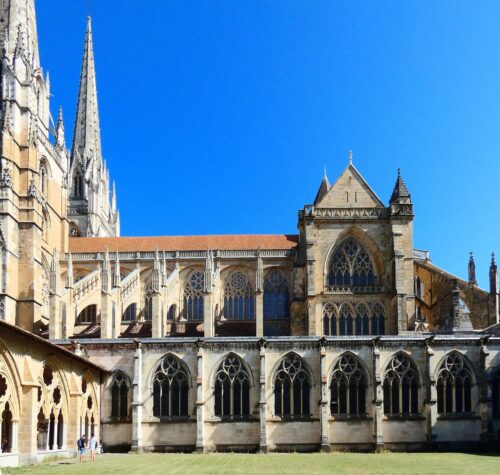
Set where the Nive meets the Adour, Bayonne is a lively town of half-timbered houses, riverside quays and covered markets. Its Gothic cathedral of Sainte-Marie and its cloister are part of the UNESCO World Heritage listing of the routes to Santiago de Compostela.
Bayonne is also a town for food lovers. It gave its name to the famous cured ham, and it has a long chocolate-making tradition: a cup of thick hot chocolate in one of the old chocolate houses is a must.
Espelette and the inland villages
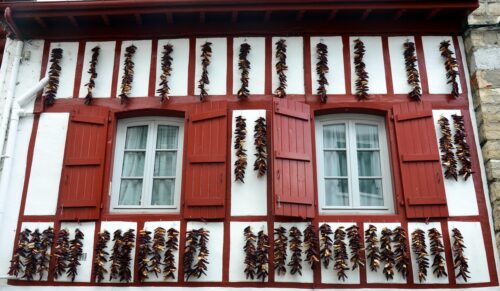
Inland, the landscape turns green and hilly. In Espelette, the facades are hung with strings of red peppers drying in the sun, the famous Espelette pepper that seasons many Basque dishes. Nearby, Ainhoa and La Bastide-Clairence are among the most beautiful villages in France, with their white houses and red timbers.
Further into the foothills, Saint-Jean-Pied-de-Port is a historic stop for pilgrims heading to Santiago de Compostela. And on a clear day, the little rack railway up La Rhune offers a view over the ocean, the Pyrenees and both sides of the border.
The Spanish Basque Country
Two cities with a strong personality, just across the border
San Sebastián, a bay and a table
Just across the border, San Sebastián (Donostia in Basque) curves around La Concha, one of the most beautiful city beaches in Europe. Climb Monte Urgull or Monte Igueldo for a view over the bay, then lose yourself in the Parte Vieja, the old town.
There, the Basilica of Santa María del Coro and the arcaded Plaza de la Constitución stand among dozens of bars serving pintxos, the Basque version of tapas. Going from bar to bar for a small bite and a glass is the best way to understand why San Sebastián is a world-famous food destination.
Bilbao, from industry to art
Once an industrial port, Bilbao has reinvented itself around culture. The Guggenheim Museum, designed by Frank Gehry and opened in 1997, is a masterpiece of contemporary architecture, with its titanium curves along the river. After the museum, walk to the Casco Viejo, the old town, for its narrow streets, its market and more pintxos.
Between the two cities, the coastline is wild and beautiful, with fishing villages such as Getaria, the home of txakoli, the local white wine.
What to eat and drink in the Basque Country
A food culture shared on both sides of the border
Food is at the heart of Basque life, on both sides of the border. Here is what to try:
- Bayonne ham and other cured meats.
- Espelette pepper, in axoa, a veal stew, or simply on grilled fish.
- Ossau-Iraty, a sheep’s milk cheese often served with black cherry jam.
- Gâteau basque, a buttery cake filled with cream or black cherries.
- Fresh fish such as hake, anchovies and sardines, and trout from Banka in the valleys.
- Pintxos in San Sebastián and Bilbao.
- Wines and cider: Irouléguy on the French side, txakoli and the wines of Rioja Alavesa on the Spanish side, and natural cider, poured straight from the barrel in the cider houses of Gipuzkoa during the season, roughly from January to April.
For more French sweets, take a gourmet tour of French regional desserts.
Outdoor activities
Surf, hike and explore between ocean and mountains
The Basque Country is a playground for nature lovers. Besides surfing, you can hike in the Pyrenean foothills, go canoeing on the rivers, try paragliding above the coast or dive along the rocky shores. The coastal path between Saint-Jean-de-Luz and Hendaye offers beautiful views over the cliffs.
When to visit the Basque Country
Lively summers, gentle springs and golden autumns
Summer is the busiest season, with warm days, festivals and lively beaches. Spring and autumn are often mild, greener and much quieter, ideal for walking, eating well and enjoying the villages. Discover our ideas for an active spring in the Basque Country.
Discover both sides with a tailor-made trip
France and Spain in one seamless journey
The Basque Country is easy to explore in a single journey: Biarritz and San Sebastián are only about 50 kilometers apart. With a tailor-made trip, we can combine the French and Spanish sides at your pace, with a private driver, a surf lesson, a pintxos tour with a local guide or a visit to a pepper producer in Espelette.
Plan your Basque Country journey
Tell us what you love, whether ocean, mountains, food or art, and we will design a Basque Country itinerary that brings together the best of both sides.
Plan my trip with Trip My France
Subscribe to our newsletter for more travel stories and ideas.