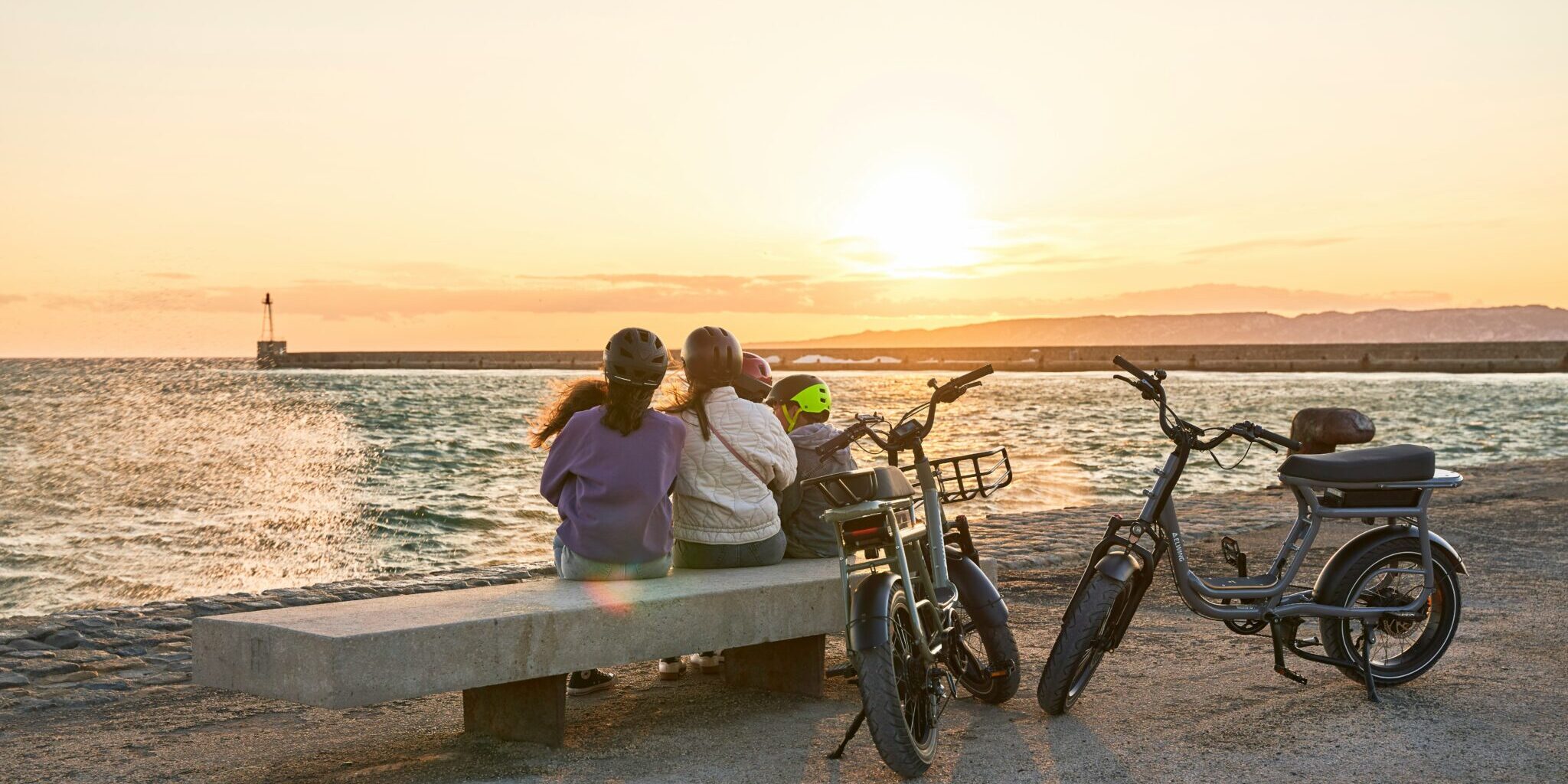
Imagine taking your bike and setting off to discover landscapes that change with every pedal stroke: the luminous Atlantic, the majestic estuary, then the vineyards of the Médoc. From Île de Ré to Bordeaux, this 10-day journey combines heritage, nature and gastronomy along an itinerary where each stage tells a story. A cycling holiday in France that blends cultural discoveries, seaside panoramas and wine excellence.
The Atlantic: dunes, marshes and island villages
Saint-Martin-de-Ré, island charm
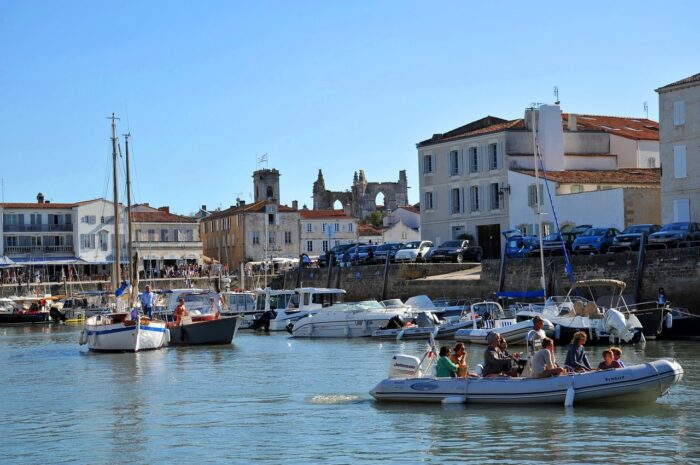
The journey begins in Saint-Martin-de-Ré, the historic capital of Île de Ré. Its ramparts, designed by Vauban and listed as a UNESCO World Heritage site, tell of a strategic military past. The harbor, still lively, invites you to stroll among terraces and artisan shops. The white houses with colorful shutters and hollyhocks lining every street create a soft and elegant atmosphere.
Beyond the architecture, the island is a territory shaped by people: salt marshes, vineyards and oyster farming form its local identity. The famous trousered donkeys, a legacy of the salt workers, symbolize this lively and amusing tradition. A walk along the ramparts at sunset offers an exceptional panorama of the ocean and the changing Atlantic light.
Île de Ré by bike: between nature and gastronomy
Discovering the island by bike is a real pleasure. The route crosses sun-bathed vineyards, endless beaches and wind-shaped dunes. Each village reveals its character: Le Bois-Plage and its seaside atmosphere. La Couarde-sur-Mer and its flower-filled lanes. Then Ars-en-Ré, listed among the most beautiful villages in France. The black-and-white bell tower of Ars-en-Ré, visible for miles, recalls the island’s maritime history and serves as a guide for sailors.
The Baleines Lighthouse, at the western tip, offers a striking panorama over the ocean and wild beaches. The return toward Saint-Martin follows the salt marshes, where herons and egrets move among shimmering basins. Gourmet breaks in oyster huts, with tastings of oysters and seafood, add a delicious touch to the experience.
La Rochelle: a spectacular arrival by sea
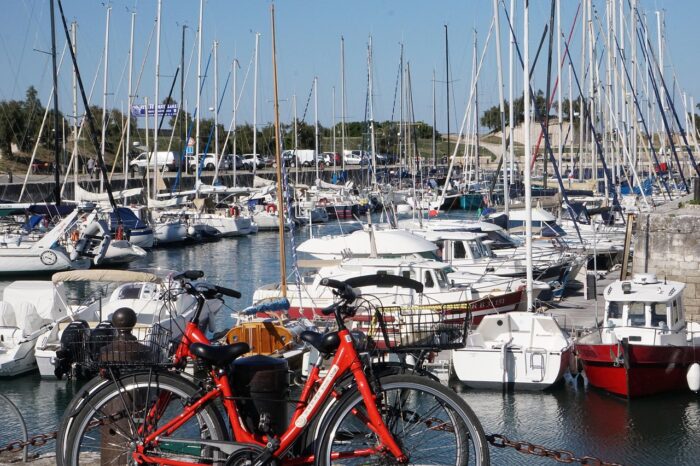
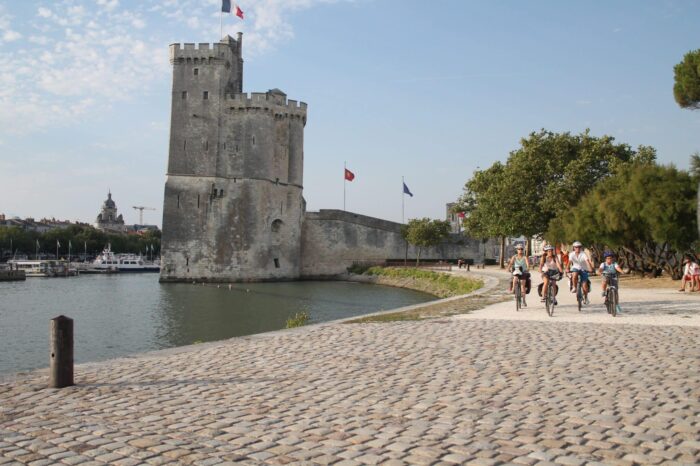
After Île de Ré, the boat crossing to La Rochelle turns the arrival into a true spectacle. From the ship’s deck, you gradually leave behind the ramparts of Saint-Martin-de-Ré and the sandy beaches, while the famous towers of La Rochelle appear on the horizon. The Saint-Nicolas Tower, the Chain Tower and the Lantern Tower are not just emblematic monuments: they testify to the military and commercial past of a city that long ranked among the Atlantic’s most active ports. Arrival by sea offers a unique view of ochre rooftops, bell towers and the harbor, creating a theatrical entrance into the city.
The old port invites wandering. Lined with cafés and lively terraces, it remains the vibrant heart of La Rochelle. History can be read in every stone: medieval arcades, 17th-century mansions and the façades of trading houses recall La Rochelle’s importance in Atlantic trade, notably salt and spice commerce.
The central market district, located a few steps away, is a must for gastronomy lovers. Here, stalls overflow with fresh produce: fish, seafood and vegetables from the Charente region. You will also find local specialties such as cheeses and oysters. Walking through this market also means discovering the daily life of La Rochelle residents and the importance of the sea in their diet and culture.
La Rochelle is not limited to the port and markets. Its museums tell of its openness to the world and its rich maritime past. The Maritime Museum immerses visitors in the history of navigation and shipbuilding. Meanwhile, the Automata Museum or the New World Museum explore other aspects of local culture and transatlantic exchanges. History enthusiasts can also visit the Natural History Museum. It houses both historic and modern scientific collections.
Rochefort and Ronce-les-Bains: history and nature
Leaving La Rochelle, the route follows the ocean, with stops in Angoulins, its rocky foreshores and its fishing huts. Then it crosses Châtelaillon-Plage, a seaside resort with Belle Époque charm. The Fouras peninsula offers panoramas over the islands of Aix, Oléron and Ré.
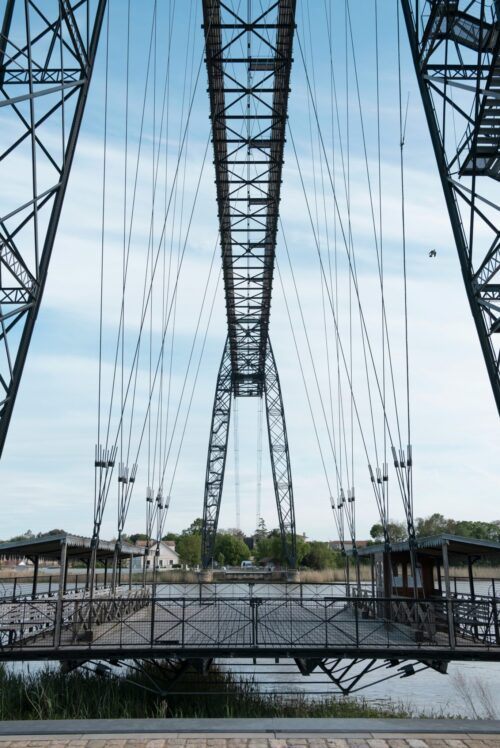
Rochefort, with its Royal Rope Factory and Naval Museum, tells the prestigious past of French shipbuilding. Crossing the transporter bridge, a 19th-century masterpiece, adds an unusual moment to your cycling holiday. The stage ends at Ronce-les-Bains, a family seaside resort on the edge of the forest. A Belle Époque atmosphere and beaches invite relaxation.
The Coubre forest and the wild coast
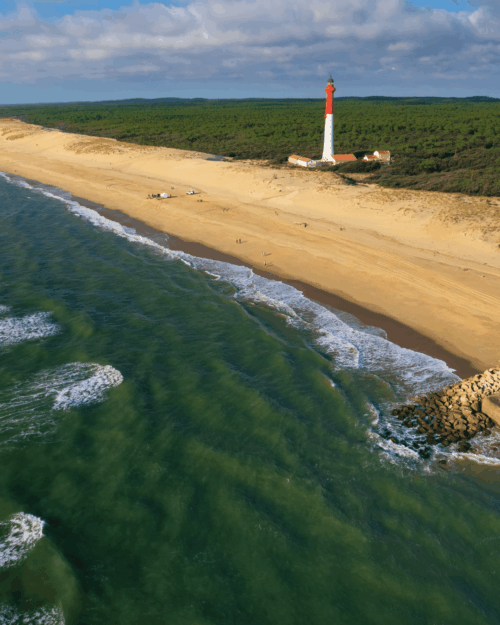
The next day, the cycling route winds through the Coubre forest, beneath maritime pines scented with resin. The horizon opens onto the wild coast, golden beaches and dunes battered by the ocean.
The Coubre lighthouse, emblem of the region, dominates this grand landscape. The road then follows La Palmyre and Saint-Palais-sur-Mer before reaching Royan, the seaside capital of the Côte de Beauté, with its large beach, retro villas and lively port.
The estuary: cliffs, medieval villages and panoramas
From Royan to Mortagne-sur-Gironde
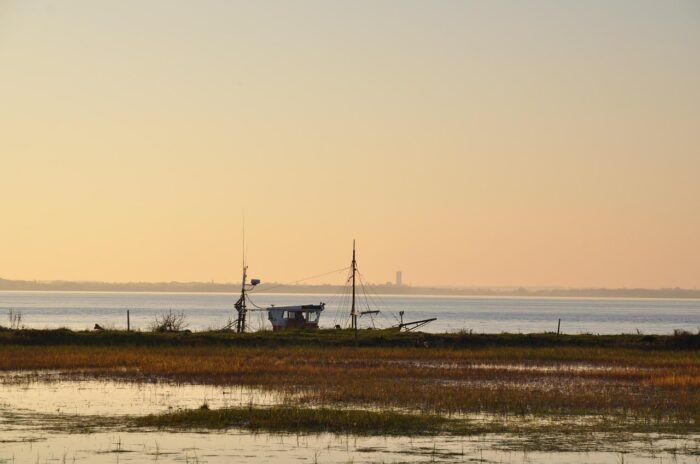
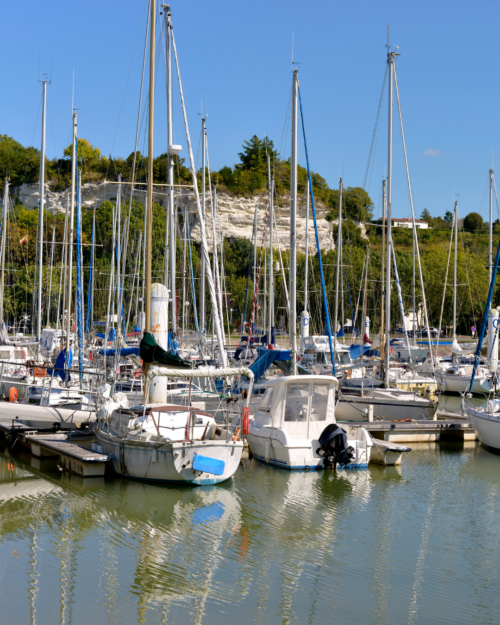
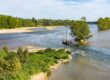
Leaving Royan, the sea gradually gives way to the Gironde estuary, the largest estuary in Europe. The landscape changes. The ocean recedes to reveal calmer waters, mudflats and small islands lined with fishing huts. These stilted fishing cabins are emblematic of the region. The bike ride becomes an immersion in preserved nature. Water, light and wind create a unique atmosphere.
The first essential stop is Meschers-sur-Gironde. Here, white limestone cliffs dominate the river and shelter troglodyte caves. Some have been transformed into homes or workshops over the centuries. From the viewpoints above, the view over the estuary is spectacular. Silvery waters blend with green islets and isolated fishing huts. Meanwhile the sun plays on waves and cliffs, offering a postcard-worthy panorama. The more adventurous can take trails down to the beaches below or visit the fitted caves, witnesses of a fascinating past.
Continuing the cycling route, you discover Talmont-sur-Gironde, listed among the most beautiful villages in France. This medieval village, founded in the 13th century, retains all its charm with cobbled streets lined with hollyhocks and blond-stone houses. The Romanesque Sainte-Radegonde church, perched on the cliff edge, overlooks the estuary. It offers one of the Atlantic coast’s most emblematic panoramas. Wandering its streets conveys both history and serenity.
The journey then continues along quiet roads winding between emerging vineyards and rolling countryside. Each bend reveals different perspectives over the water and surrounding villages. The stage ends at Mortagne-sur-Gironde. A village perched on a cliff overlooking its picturesque harbor. Colorful façades and cobbled streets offer a typical Charente coastal atmosphere. At dusk, when golden light reflects on the estuary, the spectacle is magical. Moored boats, small islands and calm waters create a romantic and peaceful atmosphere. Perfect for concluding a discovery-filled cycling day.
Blaye and the Vauban citadel
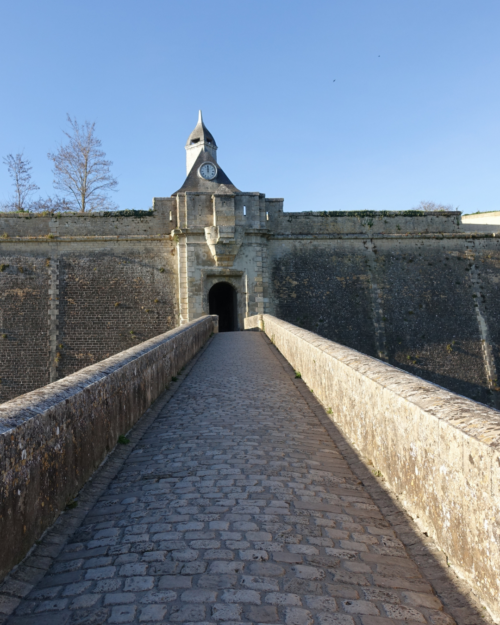
The final estuary stage leads to Blaye. The view opens over the Gironde banks and the Bordeaux vineyards. The city’s symbol is its Vauban citadel, listed as a UNESCO World Heritage site. This imposing fortress was built to protect access to Bordeaux. It dominates the estuary and impresses with its bastions, ramparts and fortified gates. Today the citadel hosts exhibitions and gardens. It offers exceptional panoramas over the river and surrounding vineyards.
Blaye also charms with its art de vivre. Local markets offer fresh produce, wines and regional specialties. Meanwhile the lively quays invite to a coffee break or a stroll along the river.
The vineyards surrounding the town, notably those of the Côtes de Blaye appellation, allow tastings and discovery of the Bordeaux terroir. Between military heritage, gastronomy and landscapes, Blaye is an essential stop for cycling travelers, preparing the entry into the Médoc and its famous grands crus.
The Médoc vineyards: grands crus and exceptional terroir
From Blaye to Pauillac
The ferry crossing from Blaye to Lamarque marks entry into the wine-growing Médoc. From the deck, the Vauban citadel gradually disappears behind you. Meanwhile the horizon fills with vineyards stretching as far as the eye can see, announcing entry into the wine-growing Médoc. The air takes on a particular scent, that of rich soils and vines. The landscape immediately becomes that of an exceptional terroir.
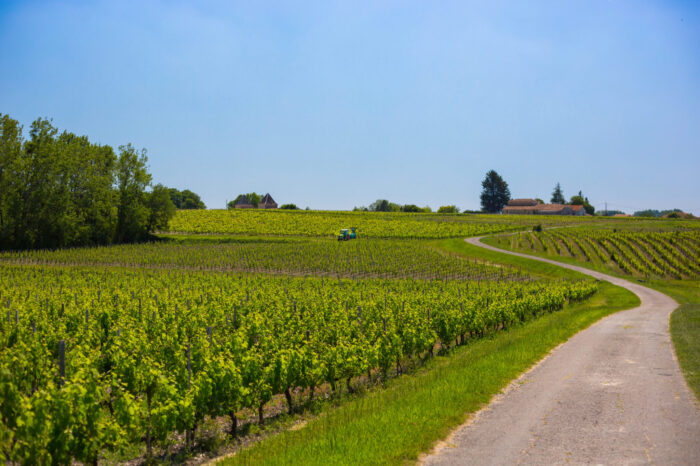
Cycle routes wind through perfectly aligned vine rows dotted with majestic châteaux. Some, like Château Cos d’Estournel, catch the eye with their oriental-inspired architecture, symbolizing the region’s luxury and international renown. Each estate has its story: wine-growing families, ancestral know-how and technical innovations combine to produce powerful and elegant wines.
Pedaling through Saint-Estèphe, you are surrounded by vineyards renowned for their structured and refined wines. The panoramas are exceptional: the estuary sparkles in the distance. Meanwhile rows of vines ripple in the wind. The villages crossed, often quiet and preserved, offer small gourmet pauses. Visits to local cellars help better understand the richness of the terroir.
Pauillac, heart of the Médoc
The day ends in Pauillac, true wine capital of the Médoc. Here, grands crus such as Latour, Mouton-Rothschild or Lafite are not merely prestigious names. They embody the history, excellence and identity of the region. A tasting in one of these estates, among the vines, allows full appreciation of the aromatic complexity and power of these world-famous wines.
Pauillac is also an ideal place to combine cultural discovery and nature. Small streets, the harbor and neighboring estates offer varied panoramas over the estuary and vine rows. Cycle tourism here takes on a unique dimension: immersion in the terroir and sensory pleasures blend perfectly.
Bordeaux: world wine capital and city of art
The stay ends in Bordeaux, an urban jewel listed as a UNESCO World Heritage site. The city harmoniously combines historical heritage, modernity and gastronomy.
Bordeaux is first discovered by strolling along its lively quays beside the Garonne. The majestic Place de la Bourse and its water mirror offer one of France’s most photographed urban panoramas. The cobbled streets of the Saint-Pierre district invite to exploration. Their cafés, shops and mansions bear witness to the city’s prosperous commercial past.
For wine lovers, the Cité du Vin is an essential stop. This modern museum offers a unique sensory journey through global wine history, from vine to tasting. Workshops, themed tastings and interactive exhibitions help visitors understand the richness and diversity of Bordeaux and international wines.
Bordeaux is also an ideal starting point for exploring nearby vineyards. The Médoc, Saint-Émilion, Pomerol and the Graves are accessible for excursions by bike or car. Wine lovers can extend the experience, discover new terroirs and combine culture with gastronomic pleasure.

An unforgettable cycling itinerary
Crossing the Atlantic coast, the Gironde estuary and the Médoc vineyards by bike is not simply a journey. It is a succession of sensations, discoveries and emotions. Each morning the sun rises over a different landscape. The shimmering marshes and golden beaches of Île de Ré, the white cliffs and fishing huts of the estuary, the perfectly aligned vine rows bordering majestic châteaux. With every pedal stroke, the diversity of places reveals the region’s natural and cultural richness.
This stay invites true immersion in the rhythm of the territories: the gentle lifestyle of island villages, the serenity of estuary banks, the elegance of wine estates and the subtle vibrancy of Bordeaux.
Along the stages, you learn to savor encounters with artisans, winegrowers and oyster farmers who share their know-how and passion. Gourmet breaks, whether freshly opened oysters by the marshes or a glass of grand cru on a Bordeaux terrace, enrich the journey with lasting sensory memories.
Finally, this cycling stay offers a perfect balance between physical activity, contemplation and cultural discoveries. The memory of each panorama, from the Baleines lighthouse to the Blaye citadel, from the Meschers cliffs to the Médoc châteaux, remains long after the journey ends.
Whether one is a cycling enthusiast, a heritage lover or an epicurean in search of great wines, this journey leaves a lasting impression, a desire to return, to extend the itinerary and to continue discovering these lands where the Atlantic and the vine echo each other with elegance.