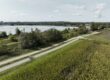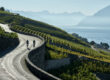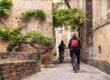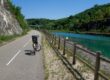
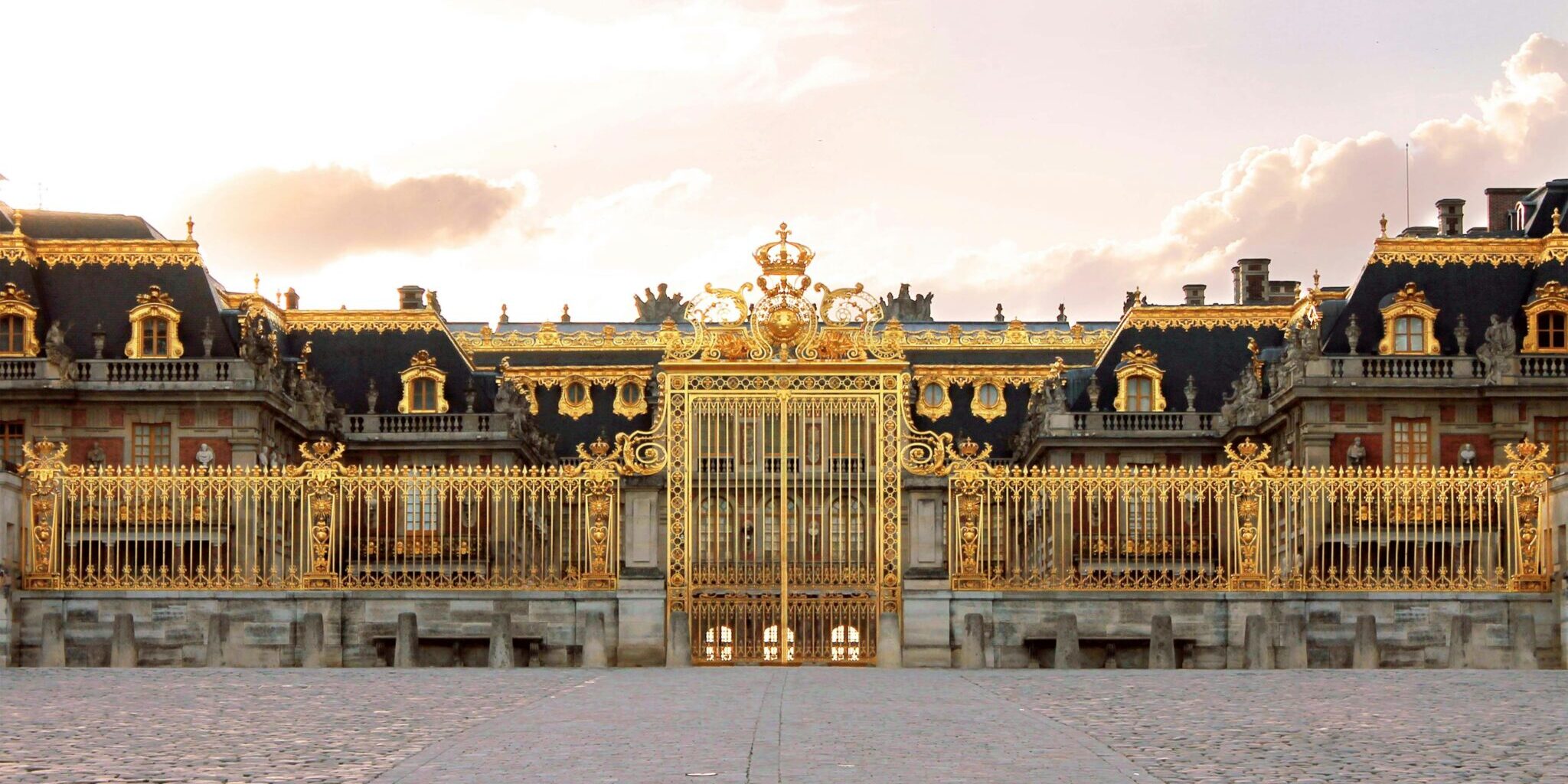
Paris captivates with its monuments, museums, and unique atmosphere, but it is also the gateway to a much broader and often underestimated region. Just a few kilometers from the city center, the scenery changes dramatically. Dense streets give way to tree-lined roads, the banks of the Seine turn into peaceful paths, and the first castles emerge as silent witnesses to centuries of history. Exploring Paris and its castles by bike offers a different kind of travel experience, slower, more immersive, and deeply sensory. Each route becomes a transition between eras, between city and countryside, between modern life and royal heritage. This way of traveling increasingly appeals to those seeking freedom, nature, and cultural discovery without relying on a car.
Cycling Around Paris: An Ideal Region for a Different Kind of Travel
The Île-de-France region is often associated with urban density, yet it actually conceals a surprisingly rich network of cycling paths, quiet country roads, and vast natural spaces. This network makes it possible to create varied and progressive itineraries, suitable for both occasional riders and experienced cyclists. One of the region’s greatest strengths lies in the diversity of its landscapes. Within just a few dozen kilometers, you can move from the vibrant capital to deep forests, then to open farmland, and finally to grand historic estates. This gradual transition is what makes cycling here so compelling, as it gives real coherence to the journey. Cycling also encourages a more respectful form of tourism, aligned with the rhythm of the places you pass through. You don’t simply cover distances, you experience them. You don’t just visit a castle, you arrive there after crossing a living, breathing landscape.
Versailles by Bike: A Royal Immersion on the Edge of Paris
Among the most iconic destinations accessible by bike from Paris, Versailles stands out as an essential stop. The ride itself is already part of the experience, as it gradually leads you away from the dense urban fabric into quieter residential areas and eventually into more open green spaces. Arriving at Versailles marks a true shift in scale. The estate impresses with its grandeur, perfectly designed perspectives, and historical significance. Once the residence of French kings, Versailles represents the height of absolute monarchy and remains one of the most powerful symbols of French heritage.
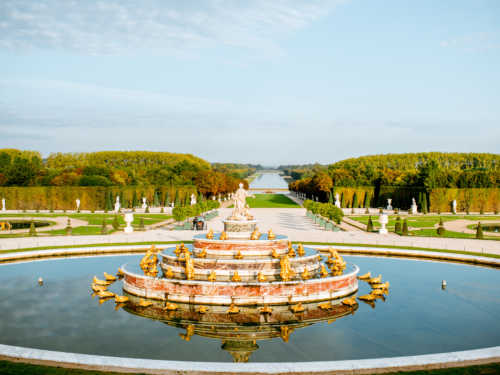
Exploring Versailles by bike also allows for a completely different appreciation of its gardens. Unlike a traditional visit, cycling offers a more fluid perception of space. The pathways seem endless, the Grand Canal stretches into the horizon, and the groves gradually reveal their hidden beauty. The estate becomes a lived landscape rather than just a tourist attraction.
Fontainebleau by Bike: Between Wild Forest and Imperial Legacy
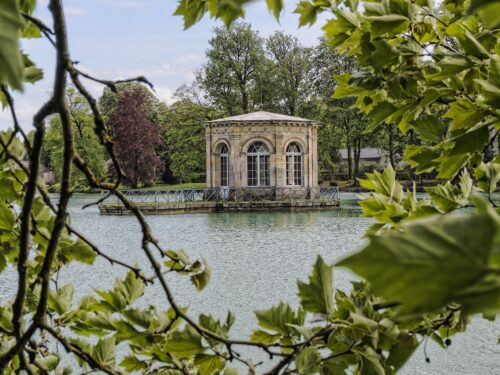
Further to the southeast, Fontainebleau offers a completely different atmosphere. The route to reach it is longer and more demanding, but it provides a gradual immersion into increasingly natural surroundings. Urban areas fade away, giving place to the Seine Valley, historic villages, and the wide agricultural plains of Seine-et-Marne. The Palace of Fontainebleau is one of the oldest and most richly layered royal residences in France. Continuously inhabited for nearly eight centuries, it spans multiple periods of French history. This remarkable continuity makes it a unique site where architectural styles and historical traces coexist.
One of Fontainebleau’s greatest attractions is its forest. A true natural monument, it offers an exceptional playground for cyclists. The scenery alternates between erosion-shaped rocks, sandy trails, towering pine trees, and quiet clearings. It is an environment that invites you to slow down, observe, and fully immerse yourself in nature.
Vaux-le-Vicomte: The Masterpiece That Inspired Versailles
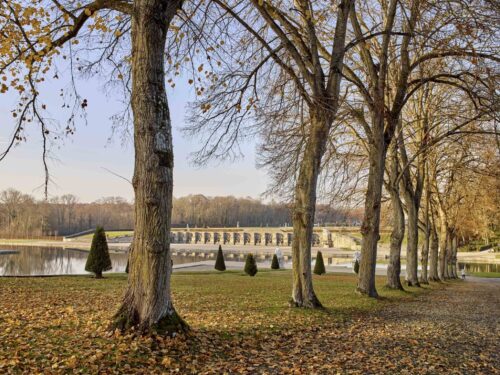
In the heart of Seine-et-Marne, the Château de Vaux-le-Vicomte is an essential stop for understanding the evolution of French architecture. Easily accessible by bike via quiet and scenic country roads, it fits perfectly into a multi-day itinerary around Paris. Built in the 17th century for Nicolas Fouquet, Vaux-le-Vicomte is a masterpiece of harmony and refinement. Its architecture, interiors, and especially its gardens had a profound influence on French landscape design. The estate is often considered the direct inspiration for Versailles.
Arriving at the château by bike enhances the experience even further. The landscape gradually opens up, revealing the majestic proportions of the estate. The gardens unfold in perfect perspective, naturally guiding the eye toward the horizon. This balance between nature and architecture is one of the most powerful experiences a cycling journey in the region can offer.
Blandy-les-Tours: A Medieval Immersion in the Countryside
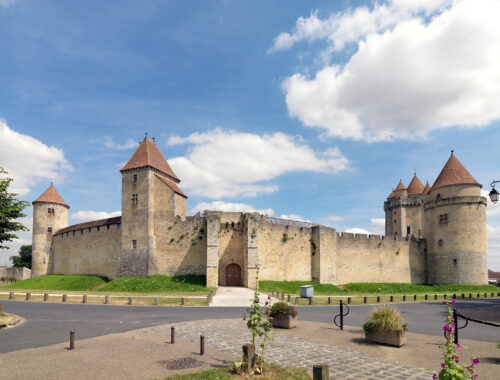
Not far from Vaux-le-Vicomte, the Château de Blandy-les-Tours offers a complete contrast to classical royal residences. Here, the atmosphere is medieval and defensive. Accessible by bike through quiet country roads, it provides a different perspective on heritage. The castle stands out for its fortified structure, massive towers, and military design. Fully restored, it offers insight into how medieval fortresses functioned in the Île-de-France region. Unlike royal palaces, Blandy-les-Tours highlights the strategic and defensive aspects of the Middle Ages.
This stop significantly enriches a cycling itinerary around Paris by introducing strong historical diversity. Traveling from Fontainebleau or Versailles to Blandy-les-Tours allows you to cross several centuries of architectural evolution in just a few days.
Tips for a Successful Cycling Trip Around Paris
A successful cycling trip in the Paris region largely depends on preparation. The seasons play an important role, as spring and autumn offer ideal conditions with mild temperatures and particularly beautiful landscapes. Summer can be more demanding, especially on longer rides or in areas with limited shade. Choosing the right bike is equally important. A gravel bike is often the best option, as it allows for comfortable riding on a variety of surfaces. Electric bikes can also be a great alternative for longer routes or for those who prioritize comfort.
Finally, the experience is enhanced by taking your time. Cycling around the castles of Paris is not about speed, but about gradual exploration. Stops in villages, unexpected detours, and moments of observation are all essential parts of the journey.
A Different Way to Discover Île-de-France
Exploring Paris and its castles by bike offers a new perspective on a region often reduced to its capital. It reconnects places, helps you understand distances, and allows you to feel the continuity of history. From Versailles to Fontainebleau, via Vaux-le-Vicomte and Blandy-les-Tours, the Île-de-France region reveals an exceptionally rich heritage. The bicycle becomes much more than a means of transport. It becomes a thread linking eras, landscapes, and stories.
This type of journey transforms the way you perceive a place. It encourages you to slow down, to observe, and to fully experience what lies between destinations just as much as the destinations themselves.