France is one of the most visited countries in the world. Every year, millions of travelers flock to Paris, the French Riviera, the Loire Valley castles, or Mont-Saint-Michel. Yet behind these iconic landmarks lies another France—quieter, more intimate, and often far more authentic.
By taking the small country roads that cross rolling countryside, mountains, and river valleys, travelers discover villages where time seems to stand still. Here, cafés spill onto shaded squares, local markets celebrate regional produce, and residents still take the time to greet visitors. Far from the main tourist routes, these places tell a different story—one of a country deeply connected to its heritage, traditions, and art of living.
If you are searching for true hidden gems in France, these six villages deserve a place on your next itinerary.
Why Discover France’s Hidden Villages?
Traveling through France’s villages is about choosing a different rhythm. It is not only about admiring beautiful architecture or taking photos. It is about feeling the atmosphere of a place, hearing church bells echo through cobbled streets, sharing a lunch on a terrace, or meeting an artisan who continues a craft passed down through generations.
These villages also reveal regions that are often overlooked by international visitors. They offer a journey through a more confidential France, where landscapes change dramatically from one region to another: the cliffs of Dordogne give way to the mountains of Haute-Provence, Normandy’s fishing ports contrast with the flower-filled villages of the Alps, and southern vineyards invite travelers to slow down and savor every moment.
For those who want to go beyond the classic itineraries, these destinations are a perfect alternative to the most crowded sites, without compromising on beauty or cultural richness.
Barfleur, the Quiet Charm of the Norman Coast
At the northeastern tip of the Cotentin Peninsula, Barfleur is one of those villages that immediately captivates with its simplicity. This small fishing port, built from grey granite, has a natural elegance that contrasts with Normandy’s more famous seaside resorts.
For centuries, Barfleur was a strategic port connecting France and England. Today, fishing boats have replaced merchant ships, and the atmosphere is peaceful and unhurried. The harbor comes alive with the rhythm of the tides, while local restaurants serve freshly caught seafood straight from the boats.
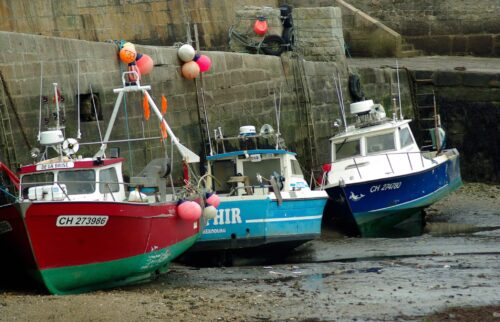
Walking through the narrow streets reveals old fishermen’s houses, independent shops, and stone façades that have withstood centuries of Atlantic storms. Just a few kilometers away, the Gatteville Lighthouse—the second tallest in France—offers breathtaking views over the English Channel and the wild coastline of the Val de Saire.
Barfleur is the perfect destination for travelers seeking an authentic Normandy, far from the D-Day beaches and major tourist hubs.
Entrevaux, a Fortress Between Provence and the Alps
The moment you see the ramparts of Entrevaux, you understand that this is no ordinary village. Perched above the Var River, it once marked the border between Provence and the Alps—and still feels like a gateway between two worlds.
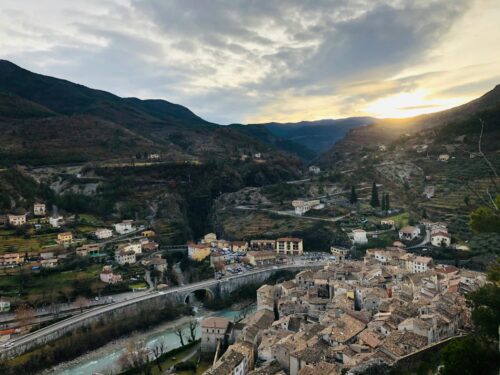
Entering the village is an experience in itself. A drawbridge leads through a fortified gate into a maze of cobbled streets that wind toward the Notre-Dame-de-l’Assomption Cathedral. Above it all, the citadel dominates the landscape from its rocky peak.
The climb to the fortress is steep but rewarding. From the ramparts, the view stretches across mountains, river valleys, and the untouched landscapes of Haute-Provence.
Entrevaux is also known for the historic Train des Pignes, a scenic railway connecting Nice to Digne-les-Bains. Traveling through this region by train is one of the most beautiful ways to discover one of southern France’s most preserved territories.
La Roque-Gageac, a Village Between Cliff and River
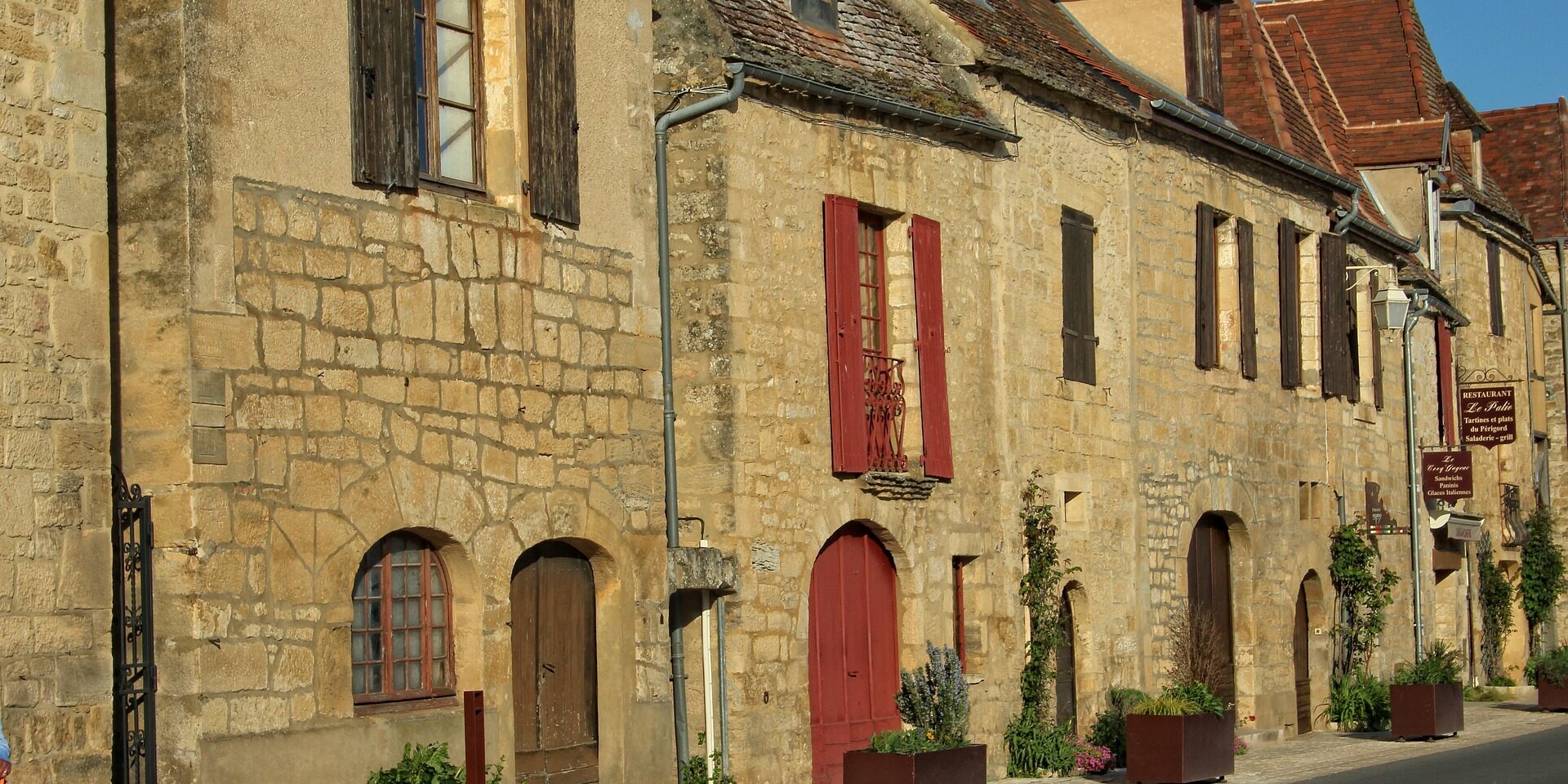
Few villages in France offer a setting as dramatic as La Roque-Gageac. Nestled between a towering limestone cliff and the Dordogne River, it appears almost carved into the rock itself.
Golden-stone houses with traditional lauze roofs stretch along the riverbank in a seemingly impossible balance. Thanks to the microclimate created by the cliff, palm trees, banana plants, and other Mediterranean species thrive here, giving the village an unexpected southern feel.
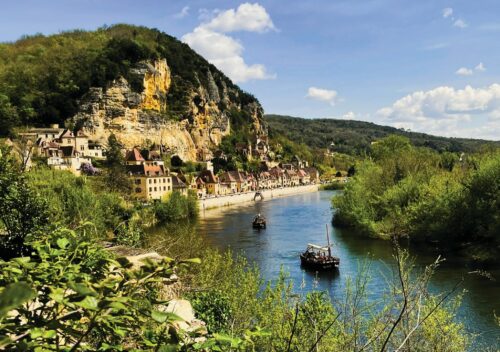
The best way to admire La Roque-Gageac is from the water. Traditional wooden boats known as gabarres once transported goods along the Dordogne and now offer scenic river cruises. From this perspective, the village and surrounding cliffs reveal their full beauty.
This stop fits perfectly into a Dordogne itinerary alongside castles such as Beynac and Castelnaud or the Marqueyssac Gardens, yet it remains peaceful when visited in the evening.
Vogüé, One of the Jewels of Ardèche
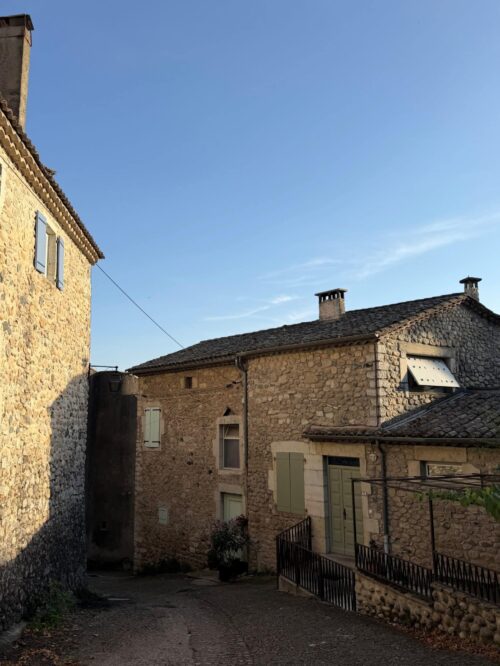
Set in an amphitheater along the Ardèche River, Vogüé looks like it was designed for postcards.
Its cobbled streets gently climb toward a Renaissance castle overlooking rows of golden-roofed houses. Every archway, stone staircase, and flower-filled square reveals a new perspective over the village or the river below.
In summer, Vogüé becomes a perfect blend of culture and nature. Small beaches along the river allow for swimming in clear water, while the surrounding area offers endless opportunities for hiking, canoeing, and exploring the famous Ardèche Gorges.
Unlike many crowded destinations in southern France, Vogüé retains a human scale and a peaceful atmosphere, making it an ideal stop on a road trip.
Yvoire, the Medieval Pearl of Lake Geneva
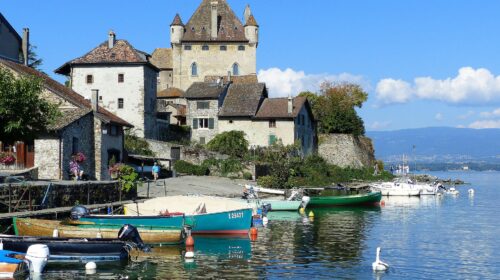
On the French shores of Lake Geneva, Yvoire looks like something out of a fairytale. Founded in the early 14th century, this fortified village has preserved its medieval layout, ramparts, and much of its original architecture.
Upon arrival, visitors are greeted by a charming harbor where pleasure boats sit alongside ferries crossing to Switzerland. The cobbled streets are lined with stone houses covered in flowers, earning Yvoire its long-standing “Village Fleuri” label. The Garden of Five Senses is one of the highlights. Inspired by medieval gardens, it invites visitors to rediscover aromatic, medicinal, and ornamental plants through a unique sensory experience.
In spring or early autumn, when summer crowds have disappeared, Yvoire reveals its true peaceful character.
Lagrasse, the Medieval Soul of Occitanie
In the heart of the Corbières region, surrounded by vineyards and sun-drenched hills, Lagrasse perfectly embodies the charm of southern France. Crossed by the calm waters of the Orbieu River, the village is dominated by a Benedictine abbey founded in the 8th century, whose buildings reflect more than a thousand years of history.
Walking through Lagrasse is a true pleasure. Narrow streets open onto lively squares filled with cafés, bookshops, and artisan workshops. Medieval bridges offer beautiful views over the river, while the surrounding vineyards produce some of the finest wines in the Corbières region. Lagrasse is also a recognized cultural destination, hosting literary festivals and artistic events that further enrich its unique identity.
When Is the Best Time to Visit These Villages?
These destinations can be visited year-round, but spring and early autumn are the most pleasant seasons. Temperatures are mild, landscapes are vibrant, and crowds are significantly smaller than in summer. Spring is ideal for Yvoire’s gardens, the green valleys of Ardèche, and the sunlit cliffs of Dordogne. In September and October, Lagrasse’s vineyards turn golden, while Normandy’s fishing ports regain their calm atmosphere. Even in summer, these villages can be enjoyed fully by visiting early in the morning, in the evening, or by staying overnight. Once day-trippers leave, they return to a peaceful rhythm that reveals their true charm.
Discover a Different France with Trip My France
The most memorable travel experiences rarely come from the most famous places. They are found in quiet streets, shared meals in family-run inns, and landscapes discovered almost by chance.
At Trip My France, we believe the best journeys happen off the beaten path. That is why we design fully tailor-made itineraries that combine iconic landmarks with lesser-known destinations chosen for their authenticity, heritage, and quality of life. Whether you want to explore Normandy, Dordogne, the Alps, Occitanie, or create a multi-region road trip across France, we craft personalized journeys adapted to your pace and interests. Because France is far more than its famous monuments, these six villages prove that true treasures still exist—hidden just beyond the main roads, waiting to be discovered.