Exploring Burgundy means following a simple thread: that of taste and history. Between Dijon, Beaune and the villages along the Route des Grands Crus, everything flows naturally. Distances are short, but each stop has a strong and distinct identity. What makes this itinerary particularly interesting is its coherence. You don’t move from one place to another by chance: everything is connected. The products tasted in Dijon originate in the surrounding villages. The wines discovered in Beaune take on their full meaning when you travel through the landscapes they come from. There is a continuity between what you see, what you learn and what you taste.
Dijon: a lively and accessible historic center
Dijon is a city that can be discovered effortlessly. The historic center is largely pedestrian, and the main sites are grouped within a compact area. No need for a complicated plan: walking is enough. To structure your visit, the Owl’s Trail (Parcours de la Chouette) remains the best option. This marked route of 22 stages allows you to connect the key sites while understanding their history. Each stop provides a detail, an anecdote or insight into Dijon’s role across different periods.
The entrance to the city is often through Place Darcy, marked by Porte Guillaume. This arch creates the transition between the modern city and the old center. Then, Rue de la Liberté naturally leads to the liveliest areas. Along the way, Les Halles de Dijon are a great stop, especially on market days. You’ll find a concentration of regional products, from local specialties to fresh goods.
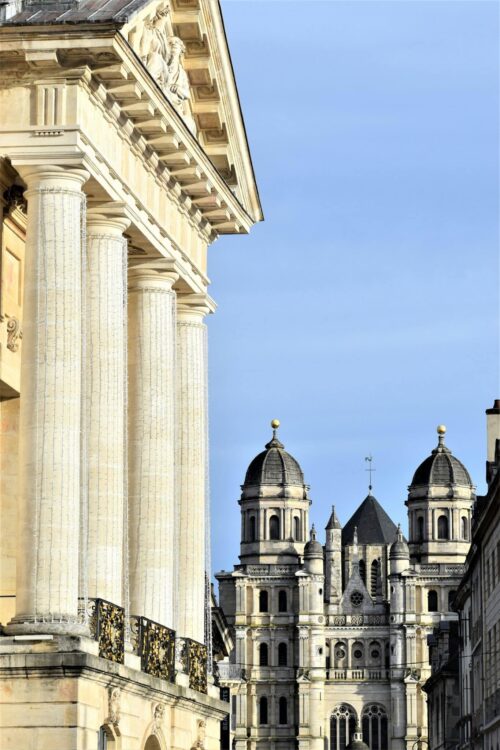
The route then leads to Place de la Libération, organized around the Palace of the Dukes and Estates of Burgundy. This complex highlights the city’s central role in the history of the Duchy of Burgundy. But what truly makes Dijon interesting are the detours. By leaving the main streets, you discover narrower roads lined with historic houses. Some feature timber-framed façades, others display more discreet architectural details. Among the religious buildings, the Church of Notre-Dame of Dijon is a must-see, particularly for its famous carved owl. Tradition says you should touch it with your left hand while making a wish. A little further on, Saint-Bénigne Cathedral stands out for its size and more imposing architecture.
Between tradition and craftsmanship
Dijon is not limited to its heritage. The city is also strongly associated with certain specialties.
Mustard remains the emblematic product. While its production has evolved over time, some houses continue traditional know-how. This is the case of Edmond Fallot, which still uses stone-ground methods and offers a wide range of variations. Another local specialty is gingerbread. The Mulot & Petitjean house is one of its historic representatives. You can find different versions, from classic to more elaborate varieties. Finally, it’s impossible to talk about Dijon without mentioning wine. Even though the city is not directly surrounded by vineyards, it remains an ideal gateway to discover Burgundy appellations. Wine bars and cellars provide a first introduction before heading into the vineyards.
Beaune: a city built around wine
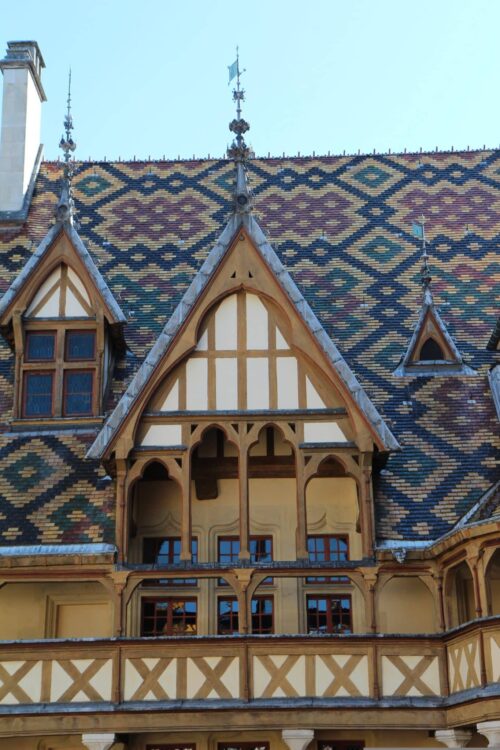
As you reach Beaune, the atmosphere shifts slightly. More focused on its heritage, the city is deeply connected to wine culture. The main site remains the Hospices de Beaune. Founded in the 15th century, this former hospital impresses with both its preservation and its architecture. The inner courtyard, with its glazed tile roofs, is instantly recognizable.
The visit helps to understand how the place functioned at the time. The Hall of the Poor, with its aligned beds, shows the organization of care, while the integrated chapel reflects the strong link between medicine and religion. Today, the Hospices also have an economic and symbolic dimension. Their annual wine auction is a major event, and the profits still support charitable causes.
Getting lost in Beaune’s historic center
Beyond the Hospices, Beaune deserves a broader exploration. The historic center, surrounded by largely preserved ramparts, is easy to explore on foot. The Collegiate Church of Notre-Dame of Beaune is a good landmark. Around it, cobbled streets and old houses create a consistent and pleasant atmosphere.
The ramparts offer another perspective. Walking along them, you discover the city from a different angle, with several towers and bastions still visible. Place Carnot concentrates local life. It is a natural meeting point, surrounded by shops and restaurants. Nearby, small passages allow you to quickly connect different areas while discovering quieter corners.
But Beaune is not limited to what you see on the surface. Beneath the city lies a vast network of cellars storing impressive quantities of bottles. This underground dimension is fully part of the city’s identity.
The Grand Cru Villages: the heart of the vineyard
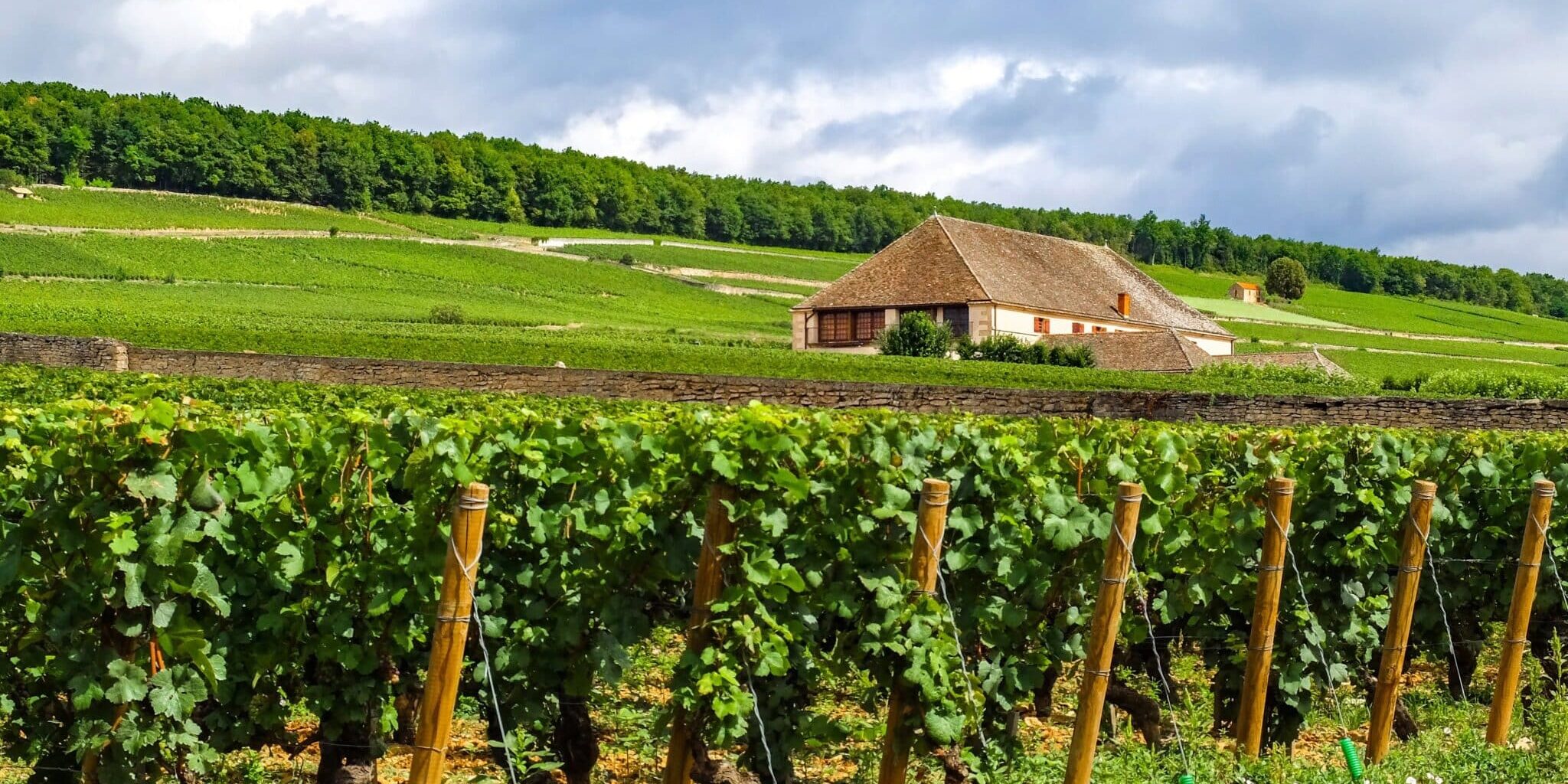
Between Dijon and Beaune, the road passes through a series of villages closely tied to the vine. Here, the landscape is structured by plots known as “climats”, which precisely define each terroir. These climats, listed as a UNESCO World Heritage Site, illustrate a unique system where each parcel has its own identity.
Among the stops to consider:
Gevrey-Chambertin
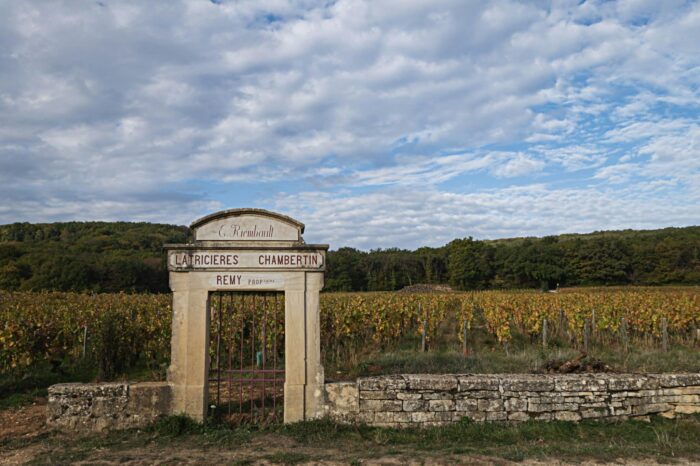
This village is one of the most emblematic names of the Côte de Nuits. Its reputation is based on a high concentration of Grand Crus, yet on site the atmosphere remains restrained, almost understated. The heart of the village is organized around its church and a few main streets, with a consistent architecture made of light stone and winegrowers’ houses.
What stands out most is the immediate proximity to the vineyards. In just a few minutes on foot, you move from houses to cultivated plots. By gaining a bit of elevation, particularly on the heights of the village, you better understand the logic of the vineyard: a succession of perfectly defined climats, each with its own characteristics. It’s an ideal place to grasp the concept of terroir in Burgundy.
Clos de Vougeot
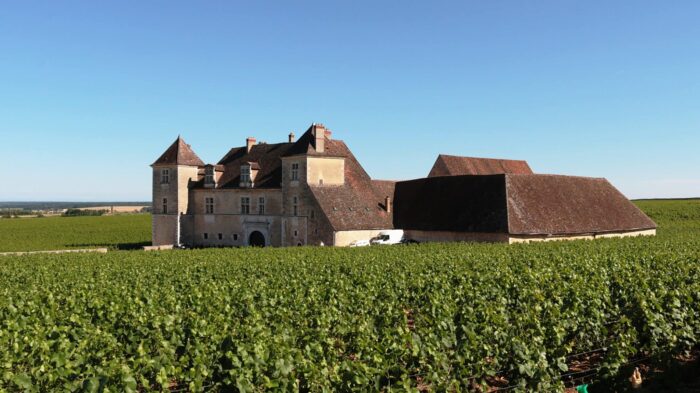
In the middle of the vineyards, Clos de Vougeot almost appears as a landmark. Surrounded by walls, this historic estate is directly linked to the Cistercian monks who structured the vineyard from the Middle Ages onward. The current château, recognizable by its glazed tile roof, still houses ancient installations. The monumental presses, the vat room and the vast cellars provide a clear idea of past production methods. The visit places wine within a long history, where agricultural know-how and monastic organization played a key role.
Today, the site is also associated with the Confrérie des Chevaliers du Tastevin, which helps promote Burgundy wines internationally.
Nuits-Saint-Georges
Located in the heart of the Côte de Nuits, this town plays a central role in the production and distribution of the region’s wines. Larger than the surrounding villages, it combines significant wine activity with spaces dedicated to discovery.
The Imaginarium offers an interactive approach to wine, accessible even without prior knowledge. It explores aromas, winemaking techniques and Burgundy’s specificities in a visual and educational way. Nearby, the Cassissium highlights another local product: blackcurrant. The exhibition traces its history, cultivation and uses, with a more playful dimension. This allows for a varied experience beyond wine.
Pommard
Pommard is often associated with characterful red wines made from Pinot Noir. The village follows the continuity of the vineyard, with estates located in immediate proximity to the plots. Several properties open their doors to visitors, offering various formats: tastings, cellar tours, vineyard walks. Some places go further by proposing a cross-approach between wine and artistic creation. This is notably the case of the Château de Pommard, which combines architectural heritage, structured gardens and contemporary artistic programming. The experience goes beyond simple tasting to offer a broader interpretation of the place and its environment.
Architecture and lifestyle shaped by the vine
In these villages, architecture follows a functional logic. Houses are built from stone, often organized around inner courtyards. Cellars occupy a central place, sometimes directly accessible from the street. There are also common elements: old churches, fountains, washhouses. Everything is designed on a village scale, with strong visual coherence.
The vine is never far away. It shapes the landscape, but also the rhythm of life. Even without visiting an estate, simply passing through these villages is enough to understand the importance of wine in the region.