Spring in France has something magical. After the winter months, nature slowly reclaims its rights: trees bud, fields are adorned with flowers, terraces reappear, and a soft light enhances the landscapes.
It is also the ideal season to discover the most beautiful villages in France. Less crowded than in summer, they reveal a more authentic, almost intimate atmosphere. You take the time to stroll, chat with artisans, savor a coffee in the sun… in short, to travel differently.
From the Luberon to Alsace, through the Lot Valley, here is a selection of must-visit villages in spring.
Roussillon: a unique palette of colors in the world
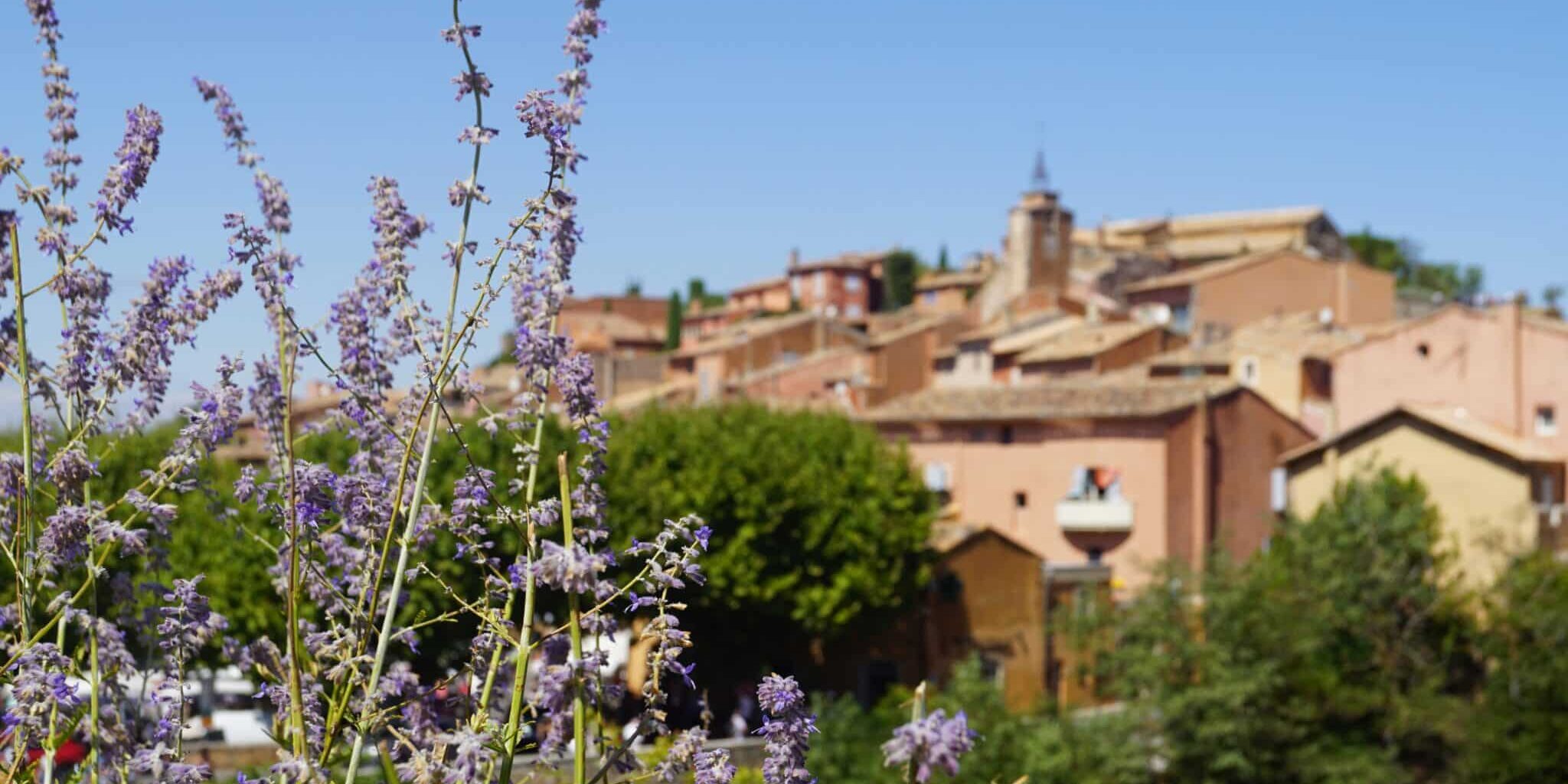
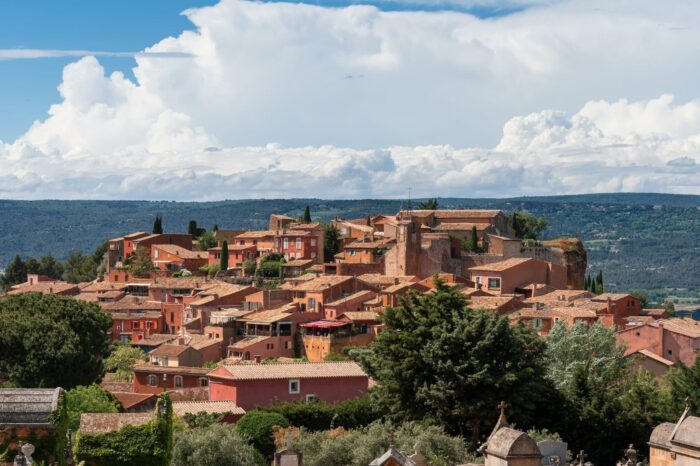
Upon arrival in Roussillon, the change of scenery is immediate. Nestled in the heart of the Luberon, this village, ranked among the Most Beautiful Villages of France, is unlike any other. Here, the houses are not gray or beige like elsewhere in Provence. They shine with flamboyant hues: golden yellow, burnt orange, deep red. A true open-air painter’s palette. This uniqueness comes from ocher, omnipresent in the region. Roussillon is indeed located on one of the largest ocher deposits in the world. For centuries, this pigmented earth was exploited and used to color facades, objects, and works of art. But beyond its spectacular colors, Roussillon is a lively and welcoming village. Its stair-step streets invite wandering, its small flowered squares exude the sweetness of life, and its artisan shops are full of local treasures.
In spring, the scenery becomes even more enchanting: flowering cherry trees contrast with the colorful facades, vineyards come back to life, and the surrounding fields gradually turn green.
An unmissable experience: The Ocher Massif
It is impossible to visit Roussillon without exploring this exceptional natural site. Two marked routes (30 or 50 minutes) allow you to discover ancient ochre quarries transformed into a spectacular landscape. Sculpted cliffs, endless shades of red and gold, Mediterranean vegetation… it almost feels like being in a western set or on another planet.
Gordes: pure Provençal elegance
If one had to choose an emblematic image of Provence, it would undoubtedly be Gordes.
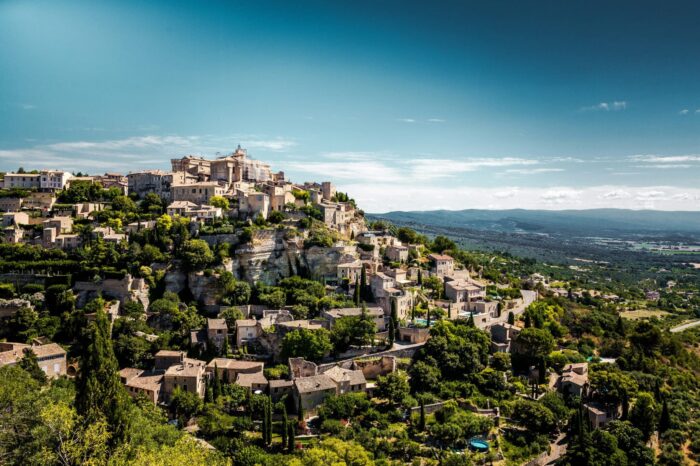
Perched on a rocky spur, this village overlooks the Luberon Valley with rare elegance. Its dry-stone houses seem literally clinging to the hill, forming a harmonious and spectacular ensemble. Ranked among the most beautiful villages in the world by many magazines, Gordes captivates as much with its architecture as with its atmosphere. In spring, the village reveals all its poetry. The light is soft, temperatures are perfect, and the surrounding landscapes are covered with wildflowers.
Getting lost in Gordes is an experience in itself. The calades, those narrow, winding cobblestone streets, tell the history of the village. At every turn, a breathtaking view of the valley appears, like a reward. The heart of the village, with its lively square and fountain, is ideal for taking a break and observing local life.
Must-sees around Gordes
Staying in Gordes also provides the opportunity to explore its surroundings, rich in exceptional natural and heritage sites. Just a few minutes from the village, several iconic places are absolutely worth a visit.
Abbaye de Sénanque: a timeless Cistercian gem
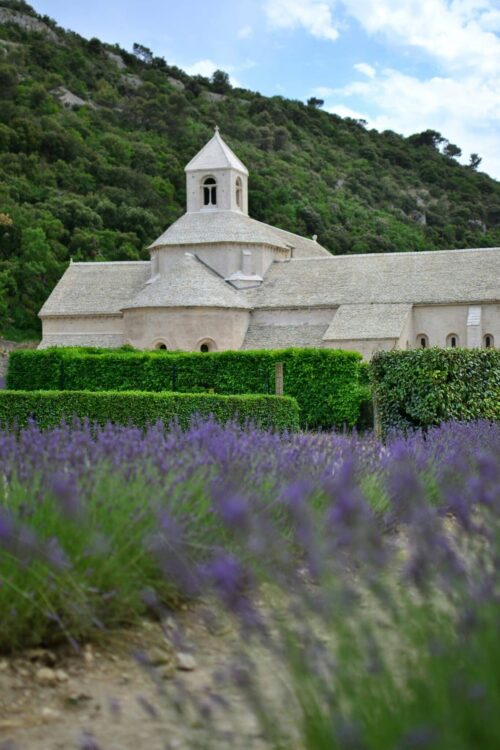
Nestled in a peaceful valley in the heart of the Luberon, the Abbaye de Sénanque is one of Provence’s most emblematic sites. Founded in the 12th century by Cistercian monks, it perfectly embodies the sobriety and harmony typical of this religious order. From the moment you arrive, the place commands silence and respect. Surrounded by gentle hills and cultivated fields, the abbey seems isolated from the world, as if protected from the outside bustle. While it is world-famous for its lavender fields in summer, spring offers an equally magical but more intimate experience. The still-green lavender rows create graphic lines around the building, while the surrounding nature gently awakens.
Village des Bories: a journey into rural past
A few kilometers from Gordes lies a fascinating site: the Village des Bories. This is an ancient hamlet made exclusively of dry-stone huts, called “bories.” Built without mortar, only by stacking stones, these dwellings testify to ancestral know-how and perfect adaptation to the environment.
The whole forms a true village frozen in time, offering a precious glimpse into rural life in Provence centuries ago. In spring, the visit is particularly pleasant: vegetation comes back to life around the blond stones, and the contrast between nature and architecture is striking.
Eguisheim: an Alsatian village worthy of a fairy tale
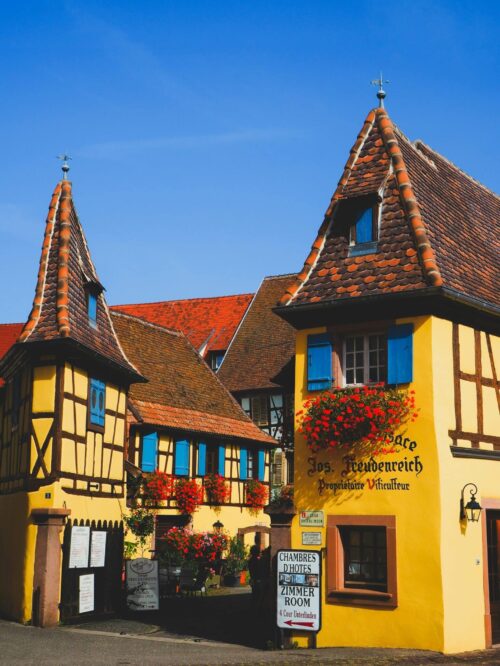
Eguisheim is often considered one of the most charming villages in Alsace… and it’s enough to set foot there to understand why. Its organization in concentric circles around the central castle is unique in France. While walking, one almost feels like moving in a colorful spiral. The half-timbered houses, painted in pastel or bright tones, are beautifully maintained. In spring, they are adorned with flowers, particularly geraniums, overflowing from windows and dressing the streets.
The atmosphere is peaceful, almost timeless. After winter, the village slowly awakens: terraces reopen, markets resume, and inhabitants bring life back to the facades.
Heritage highlights in Eguisheim
Eguisheim is not just a charming village: it is a true concentration of Alsatian history and traditions. Every street, every half-timbered house tells a story, and the architectural heritage is remarkably preserved.
Saints Peter and Paul Church: a Gothic treasure
Built in the 13th century, Saints Peter and Paul Church is one of Eguisheim’s jewels. Its sober yet elegant Gothic architecture reflects the spiritual wealth of the region at that time. In spring, the gardens and flower beds around the church flourish, adding a touch of color and freshness to this heritage visit.
Saint Léon IX Castle: tribute to the pope born in Eguisheim
Eguisheim is the birthplace of Pope Saint Leo IX, and Saint Léon IX Castle is a symbol of this history. The well-preserved castle overlooks the village and offers insight into the power and prestige of local families in the Middle Ages. Every stone seems to tell the strong link between Eguisheim and Alsace’s religious and political history.
Medieval walls and historic fountains: a living village
Eguisheim is surrounded by medieval walls that recall its defensive role over the centuries. Strolling along these walls is like walking through time. The village also hosts many ancient fountains, often carefully decorated and reflecting daily life in the Middle Ages and Renaissance. These fountains, beautifully flowered in spring, are perfect resting and admiring spots for walkers.
Eguisheim: a land of gastronomy and wine
Beyond its heritage, Eguisheim shines through its gastronomy and renowned vineyards. In spring, landscapes turn tender green, and vineyards awaken, offering a magnificent setting to combine walks and tastings. Local markets also offer seasonal fruits and vegetables, fresh herbs, and artisanal products, perfect for extending the gourmet experience.
A must: a tasting in a local cellar, accompanied by Alsatian specialties
Saint-Cirq-Lapopie: a cinematic scenery suspended in time
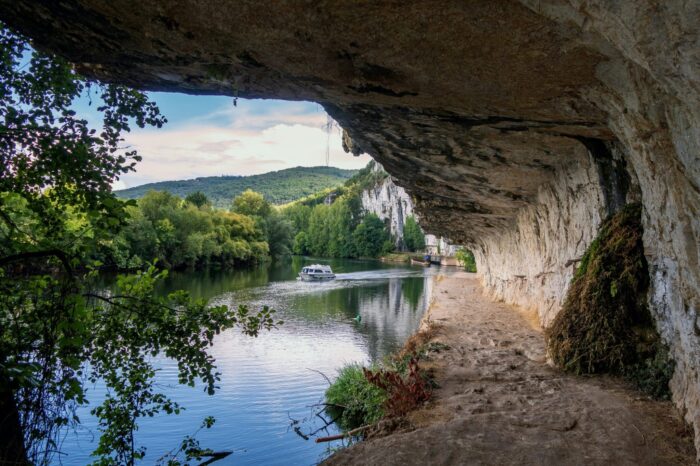
Clinging to a cliffside overlooking a meander of the Lot, Saint-Cirq-Lapopie is one of France’s most spectacular villages. Its charm is immediately striking. Stone houses with steep roofs, medieval streets, fortified gates… everything seems frozen in another era. Elected Favorite Village of the French in 2012, it has gained renewed popularity but retains a unique atmosphere, especially in spring. At this season, the surrounding nature is resplendent: the Lot Valley turns green, cliffs light up, and the river reflects the soft sunlight.
The village also has a rich artisanal history. It was once famous for its woodturners, who notably made barrels for wine transport. In the 20th century, it attracted many artists, drawn by its beauty and atmosphere. Among them, André Breton, a major figure of surrealism, helped make the village known.
Even today, Saint-Cirq-Lapopie is a creative place: art galleries, artisan workshops, and artist residencies animate its streets.
Spring: the ideal season to explore France differently
- Traveling in spring means rediscovering familiar places in a new light.
- A nature in full rebirth: flowers, budding trees, green landscapes
- Pleasant temperatures: perfect for walking and exploring
- Less crowd: a more authentic experience
- Seasonal products: local markets, spring specialties
- Exceptional light: ideal for photography
It is also a season conducive to encounters, where villages come alive without yet being overwhelmed by mass tourism.
These villages are not only beautiful. They tell a story, a way of life, a special relationship with time. In spring, everything invites you to slow down: take a coffee on a terrace, chat with an artisan, walk without a precise goal, stop in front of a landscape. Whether you are a photography enthusiast, a heritage lover, or simply seeking an escape, these villages are perfect destinations for a timeless interlude.