Cycling holidays are now one of the most desirable forms of tourism in Europe. In France, a pioneer country in cycling tourism, infrastructure has developed considerably in recent years, with thousands of kilometres of greenways, cycle routes and signposted itineraries connecting the most beautiful regions of the country. This transformation has given rise to a new way of travelling: slower, more immersive, more respectful of territories and above all deeply human. With Trip My France Bike Tours, cycling becomes a true guiding thread to discover France differently, far from tourist highways and standardised circuits.
From the Loire castles to the vineyards of Burgundy, from Alsatian villages to the wild coasts of Brittany, passing through the bright landscapes of Provence or the secret valleys of Dordogne, each itinerary becomes a full experience in itself.
Here are 10 reasons to choose a cycling trip for your next holiday.
1. Cycling travel offers total freedom and a unique sense of autonomy
Travelling without time constraints or imposed rhythm
The main advantage of cycling travel is undoubtedly the absolute freedom it provides. Unlike traditional organised trips, where schedules dictate the course of the day, cycling tourism allows you to take full control of your time. You can leave early in the morning to enjoy the freshness, or on the contrary take your time to enjoy a long breakfast. You can cover a long distance or choose to shorten your stage to spend more time in a village that appeals to you. On an itinerary such as the Loire Valley, this freedom takes on its full meaning: you can decide to visit Chambord Castle in the morning, stroll through Amboise in the afternoon, and then end the day by the river in a small Loire village.
Flexibility that transforms the travel experience
This autonomy also allows you to modify your route along the way. A secondary road crossing a vineyard in Burgundy, a detour to a local market in Provence or an unexpected stop in a village café become key moments of the journey. Cycling travel is no longer a fixed itinerary but an evolving experience shaped by your desires and discoveries.
2.Deep immersion in the most beautiful regions of France
Seeing France at human scale
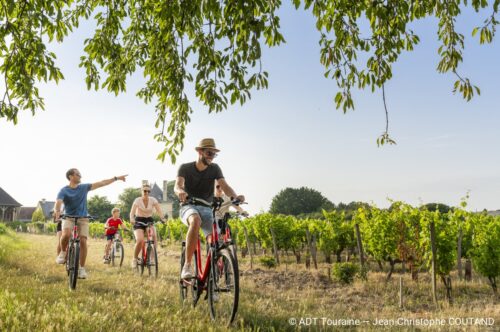
By bike, France is discovered differently. Landscapes are no longer quick images seen from a car, but living scenes that you slowly travel through. Each region reveals its personality: the rolling vineyards of Burgundy, the spectacular cliffs of Normandy, the deep forests of Dordogne or the lavender fields of Provence.
Iconic destinations to discover by bike
The Loire Valley stands as one of the most iconic cycling routes in France, where cycling allows you to smoothly connect some of the country’s most majestic castles in a UNESCO World Heritage landscape, between a peaceful river and perfectly preserved scenery. In Burgundy, the journey takes on a more intimate and sensory dimension, in the heart of an exceptional wine region where villages seem frozen in time, surrounded by gentle hills and prestigious estates that tell centuries of wine-making tradition. Further northwest, Brittany offers a radically different atmosphere, more raw and deeply maritime, where coastal routes alternate between rugged cliffs, authentic fishing ports and wild beaches exposed to Atlantic winds, creating an intense and contrasting travel experience.
3.A complete and deeply human sensory experience
Cycling engages all the senses
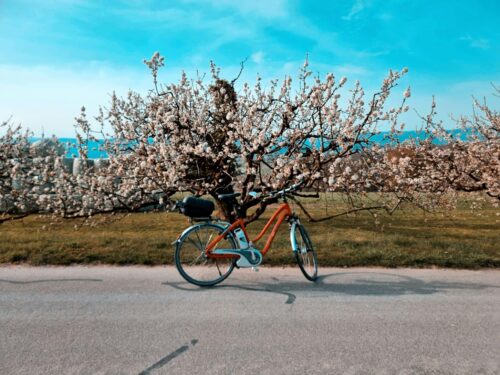
Cycling tourism is not just a physical activity, it is a complete sensory experience. The slow pace of cycling allows you to perceive details invisible in fast travel. The scent of vineyards in summer in the Bordeaux region, the sound of cicadas in Provence, the freshness of Dordogne undergrowth or the sea air of the Atlantic coast become essential elements of the journey.
A unique closeness to the territories crossed
On the small roads of Provence, cycling takes on a luminous and sensory dimension, where the warmth of the stone in hilltop villages such as Gordes or Roussillon blends with the scents of garrigue and sun-drenched landscapes. Further northeast, Alsace offers a radically different yet equally enchanting atmosphere, with its half-timbered villages such as Riquewihr or Eguisheim, where flower-lined streets and traditional architecture give the impression of crossing a frozen-in-time setting. At every stage, cycling becomes a complete immersion in deeply living environments, where each region reveals its own identity, between culture, heritage and preserved nature.
4.Cycling is one of the most ecological forms of travel
An extremely low environmental impact
Cycling tourism is now considered one of the most sustainable forms of tourism. It generates no direct CO2 emissions and significantly reduces the carbon footprint of travel. In a context where ecological transition is becoming essential, choosing a cycling trip is a concrete act in favour of responsible tourism.
Tourism that supports local economies
Cycling naturally promotes a more local and responsible economy, encouraging short supply chains and direct exchanges with local actors. Travellers take time to stop at village restaurants, stroll through markets or meet passionate producers who gladly share their expertise. In the Bordeaux region, routes wind through prestigious wine estates, offering a unique opportunity to meet winemakers directly and discover their work in the vineyards. In Burgundy, stops in villages become opportunities to taste aged cheeses, renowned wines and regional specialities, in an authentic atmosphere where terroir is both lived and tasted.
5.An authentic discovery away from mass tourism
Accessing preserved territories
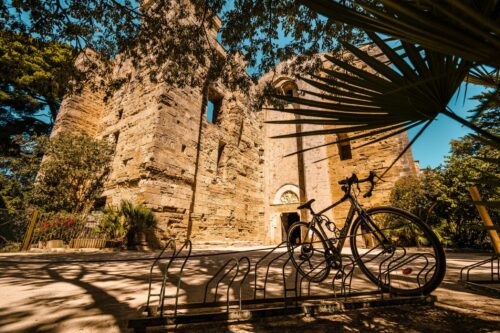
Cycling opens access to territories often invisible to motorised travellers, by taking small country roads, greenways and secondary paths that offer a much more intimate and authentic reading of the regions crossed. In Normandy, these routes connect the D-Day beaches while crossing peaceful bocage landscapes, elegant stud farms and historic villages, where every detour tells a fragment of the past. Further south, in Dordogne, the journey takes on a more spectacular and wild dimension, with roads winding through green valleys, prehistoric caves and medieval castles perched on cliffs, creating a succession of panoramas where nature and history constantly interact.
Spontaneous human encounters
Cycling naturally encourages interaction. It is easier to stop at a bakery, talk with a local resident or share a moment with a local craftsman. These encounters often become the most memorable souvenirs of the journey.
6.An activity accessible to all thanks to adapted routes
Routes designed for all levels
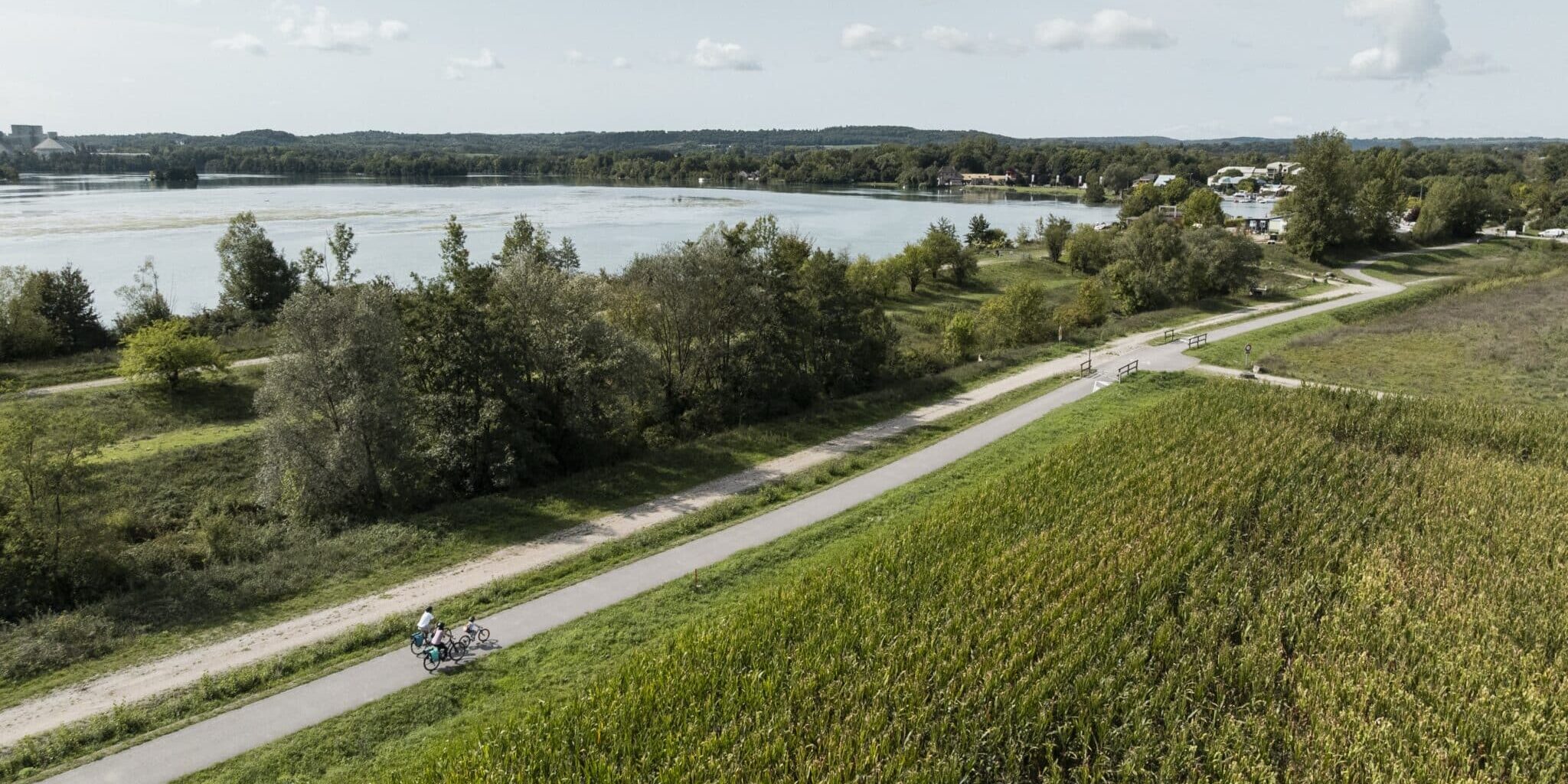
Cycling travel is not reserved for experienced cyclists. Many routes are flat, safe and accessible to beginners. The Loire Valley is the perfect example of an accessible itinerary, thanks to its continuous cycle paths and low elevation.
Electric bikes change everything
The arrival of electric-assisted bicycles has also transformed cycling tourism. It allows longer distances to be covered without excessive effort and makes hillier regions such as Provence or Burgundy accessible.
7.Exceptional cultural richness at every stage
France, an open-air museum
Travelling by bike in France means travelling through a true open-air history book, where each region reveals a different page of national heritage along the kilometres. In the Loire Valley, majestic castles embody the splendour of the French Renaissance, reflecting a period where art, architecture and power were closely intertwined. In Burgundy, the landscape becomes more spiritual and contemplative, marked by the presence of abbeys and monastic sites that recall the profound influence of religious life on the cultural and economic development of the region. Further east, Alsace offers a unique historical reading, where half-timbered villages and typical architecture reflect the back-and-forth of Franco-German history, creating a unique cultural identity felt at every stage of the journey.
Slow and in-depth discovery of heritage
Cycling allows you to freely stop to visit a monument, enter a Romanesque church or explore a local museum. Unlike fast travel, each discovery becomes meaningful because it is part of a slower overall rhythm.
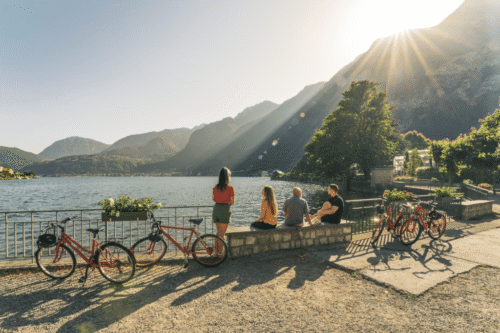
8.A total disconnection from modern daily life
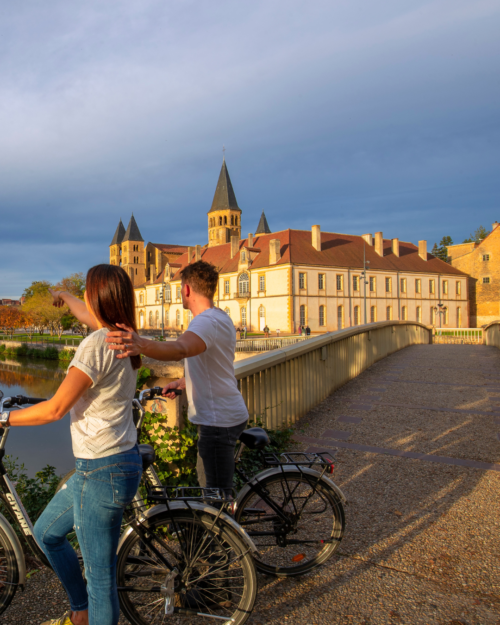
Cycling brings you back to essentials. No heavy traffic, no mental overload. Cycling along the Atlantic coast, between dunes, forests and ocean, brings a deeply calming rhythm guided by daylight and natural sensations.
9.An unforgettable human and emotional adventure
A cycling trip leaves a lasting imprint: a sunset in Provence, a wine tasting in a Bordeaux estate, or arriving in a medieval village illuminated in Burgundy.
Beyond landscapes, cycling travel transforms the way we travel. It teaches patience, observation and appreciation of simple things.
Cycling travel, a new way to discover France
Choosing a cycling trip is much more than choosing a means of transport. It is adopting a travel philosophy based on slowness, authenticity and connection to territories. With exceptional destinations such as the Loire Valley, Burgundy, Provence, Brittany, Normandy, Bordeaux, Dordogne or Alsace, France is perfectly suited to this immersive experience.
Cycling doesn’t just take you somewhere. It turns every kilometre into an experience and every landscape into a memory.