In spring, the Basque Country undoubtedly shows its most beautiful face. The light is softer than in summer, the green reliefs contrast with the deep blue of the Atlantic, and the villages regain a peaceful animation. It is the ideal season to discover this region at an active yet serene pace, between panoramic hikes, bike rides, and exploration of exceptional heritage.
Located at the southwestern tip of France, between the ocean and the Pyrenees, the French Basque Country is organized around three former historical provinces: Labourd, Lower Navarre, and Soule. This geographical diversity explains the richness of the landscapes, as well as the variety of atmospheres encountered within just a few kilometers.
A Homogeneous and Deeply Identitarian Architecture
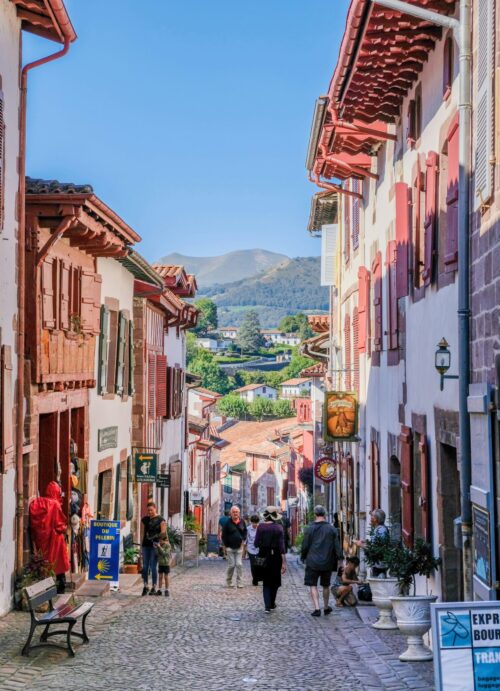
Basque architecture is one of the most emblematic features of the region. Traditional houses, called etxe, are distinguished by their bright white façades, red, green, or sometimes blue timber frames, and flat tile roofs. This visual coherence gives the villages an immediately recognizable identity and a timeless charm. The style is not only aesthetic: it responds to climatic constraints and local traditions while highlighting the sense of community and sharing.
La Bastide-Clairence, Medieval Balance
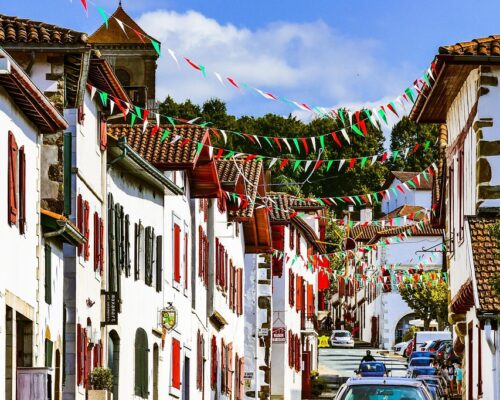
La Bastide-Clairence is a perfectly preserved medieval jewel. Founded in the 14th century, the bastide was designed to combine protection and commercial organization. Its central square, lined with stone arcades, invites leisurely strolls, while the wooden galleries allow visitors to contemplate the village from an elevated viewpoint. The massive and sober Notre-Dame Church dominates the square and brings a calming presence. The cobbled streets, ancient fountains, and sculpted façades tell the story of the inhabitants and provide a precise idea of medieval community life.
Espelette, the Symbolic Village
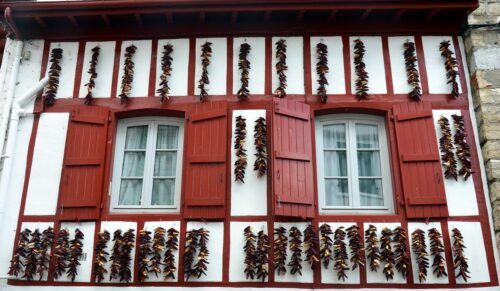
In Espelette, architecture becomes almost a living spectacle. The white walls serve as a backdrop for garlands of red peppers hung to dry. These vibrant colors, combined with the green shutters, create a visual signature that is immediately recognizable and symbolic of Basque identity. The Saint-Étienne Church and the Barons d’Ezpeleta Castle remind visitors that the village was also a strategic and noble site. Walking through Espelette’s streets in spring, with the sweet and spicy scent of peppers in the air, is a unique sensory experience.
Bayonne, Verticality and Reflections on the Nive
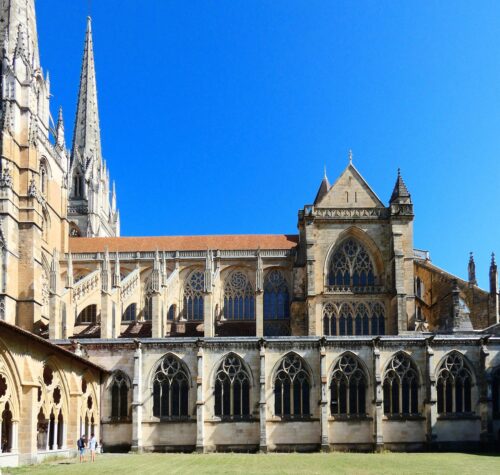
Bayonne offers a fascinating contrast with smaller villages. The historic center, with its tall and narrow buildings, cobbled streets, and colorful shutters, seems to rise from the ground like a living urban patchwork. The reflections of the façades in the Nive create almost pictorial images. The imposing Gothic Sainte-Marie Cathedral offers an immersion into medieval and religious history, while the lively market halls and cafés provide a glimpse of the city’s current rhythm. Strolling here allows one to feel the city breathe between tradition and modernity.
The Basque Coast, a Grandiose Natural Stage
The Basque coastline is a place of constant contrast: steep cliffs, fine sandy beaches, picturesque ports, and elegant villas alternate over the kilometers. Spring allows visitors to enjoy this spectacular scenery without the summer crowds.
Biarritz, Elegance Facing the Ocean
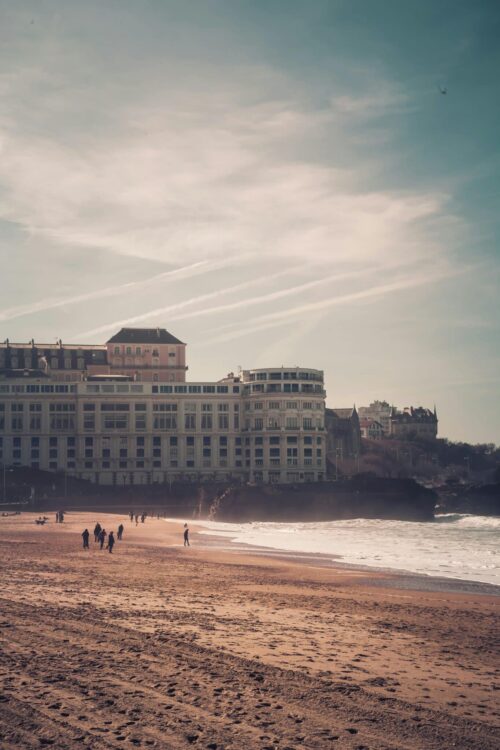
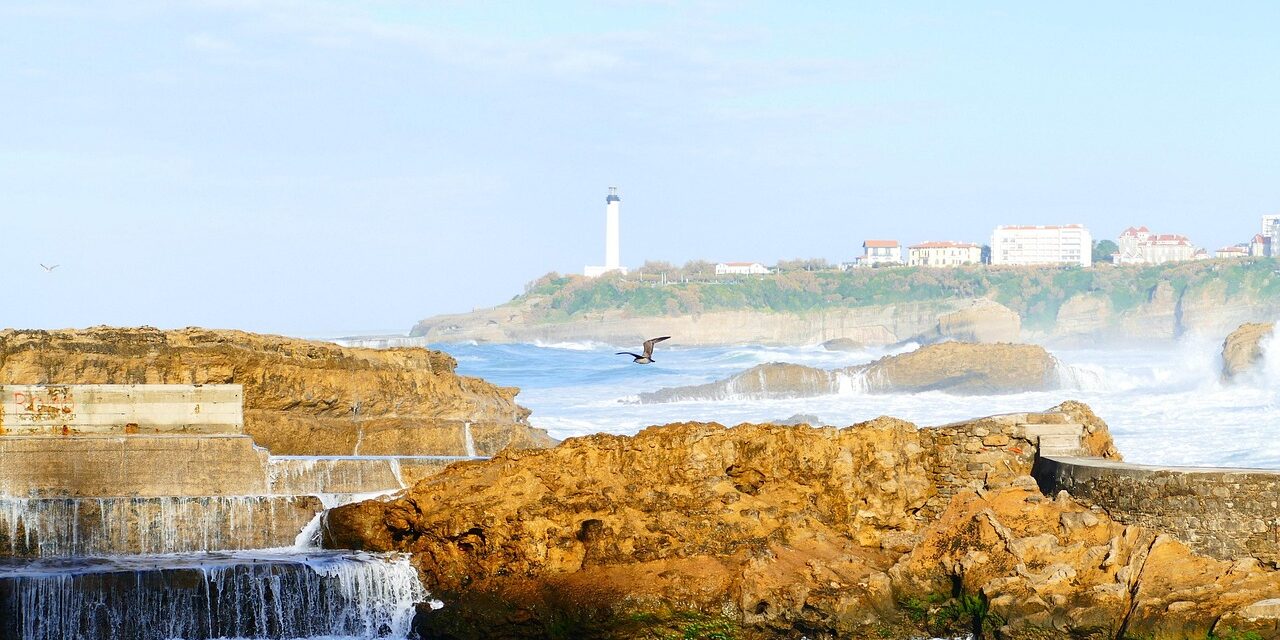
Formerly an imperial resort, Biarritz has preserved architectural heritage marked by the Belle Époque. The Rocher de la Vierge, accessible via a metal footbridge, offers a spectacular view of the ocean and distant mountains. The Grande Plage, framed by historic hotels, contrasts with the jagged cliffs of the Côte des Basques, a major European surf spot. The villas and shaded parks testify to its fashionable past. Walks along the coastal paths reveal the diversity of the shoreline and the meeting of rock, sand, and coastal vegetation.
Saint-Jean-de-Luz, History and Softness
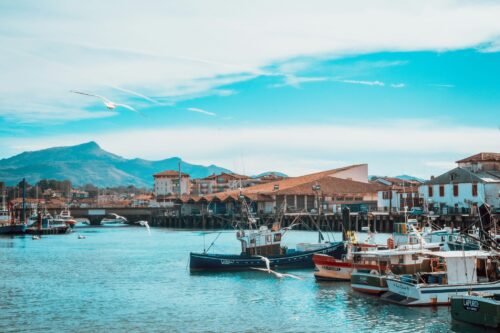
Further south, Saint-Jean-de-Luz exudes an intimate and warm atmosphere. Its protected bay, lively port, and pedestrian streets are surrounded by mountains that give a natural cocoon-like feeling. The shipowners’ houses, with sculpted balconies and colorful façades, recall past prosperity through fishing and trade. Saint-Jean-Baptiste Church, site of the historic marriage of Louis XIV and Marie-Thérèse d’Autriche, makes tangible the link between local and national history. The Fort of Socoa, directly opposite, adds a military and strategic note to the maritime landscape
The Basque Corniche, Mineral Power
Between Ciboure and Hendaye, the Basque Corniche stretches over about ten kilometers. The jagged cliffs plunge into the ocean and offer spectacular viewpoints. Waves crash at the base of the rocks, creating a striking contrast with vegetation clinging to the steep slopes. At sunset, the spectacle is magical: the rocks take on warm, golden tones, and the light caresses the villages perched on the cliff edges.
Wilder and More Mountainous Inland Lands
Moving away from the coast, the Basque Country reveals a wilder face. Roads wind through valleys and hills, forests thicken, and villages sometimes appear as if from another time. Nature dominates and asserts its grandeur.
La Rhune, Basque Country’s Lookout
La Rhune, rising to 905 meters, is an emblematic and easily accessible summit. Its ascent on foot offers a panorama encompassing the ocean, mountains, and Basque villages. Pottoks, the region’s small horses, graze freely, adding an authentic touch to the landscape. The historic rack railway, in operation since the early 20th century, also allows a relaxed ascent to enjoy the viewpoints and exceptional flora.
Saint-Jean-Pied-de-Port, Gate of the Trails
Nestled at the foot of the mountains, Saint-Jean-Pied-de-Port is the last stop before crossing into Spain for pilgrims on the Way of Saint James. The ramparts and citadel overlook the valley, while cobbled streets wind between ancient houses with carved lintels. The Nive de Béhérobie flows through the town, reflecting its colorful façades. The mix of history, spirituality, and daily life makes this village particularly lively and captivating.
A Vibrant and Assertive Culture
Beyond its landscapes, the Basque Country is distinguished by a strong cultural identity. The Basque language (euskara) remains alive and is taught in schools, while local festivals and markets illustrate a deep attachment to tradition. Basque pelota, played on the frontons, punctuates the afternoons, while artisans preserve ancestral skills through ceramics, textiles, and local products.
The gastronomy also embodies this identity. Espelette pepper flavors the dishes, Bayonne ham and sheep cheeses reveal the terroir and the seasons. The Basque cake, simple yet tasty, symbolizes both conviviality and respect for ancestral recipes. A visitor sitting at a Basque table immediately feels this connection to the land, history, and people.
A Complete Destination in Spring
Spring in the Basque Country is a season of balance. Temperatures are ideal for hiking, cycling along hilly roads, or strolling along the coastline. The landscapes are vibrant without being oppressive, and the authenticity of the villages is fully expressed.
Between ocean and mountains, heritage and nature, seaside elegance and rural traditions, the Basque Country offers a dense and coherent experience. A destination where every panorama tells a story and where every village asserts, with strength and pride, its identity.