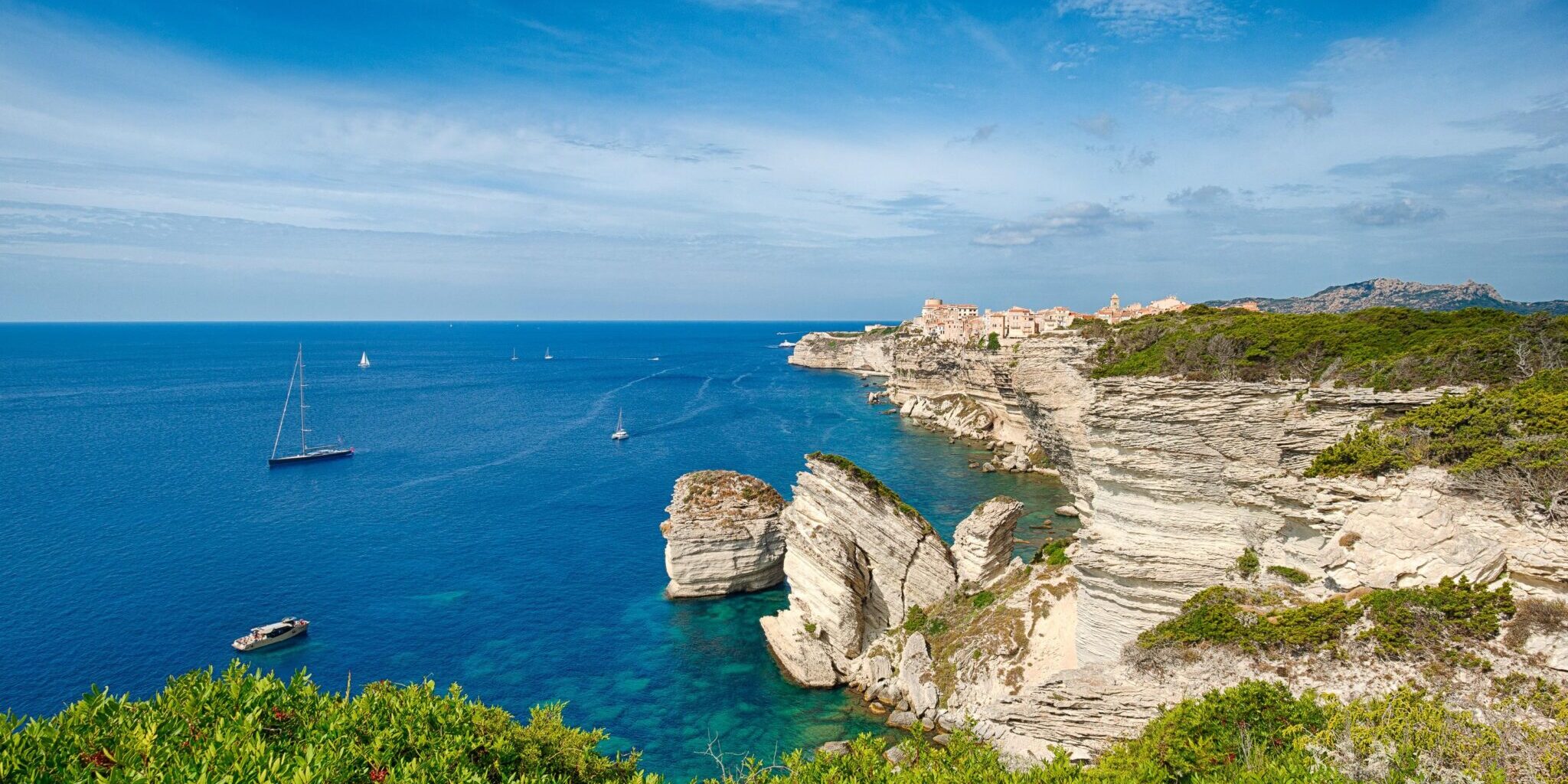
It only takes a first glance to understand why Corsica is so fascinating. Set in the Mediterranean like a raw jewel, it offers an almost unreal diversity of landscapes, where the sea, the mountains and the maquis coexist in a small but intensely contrasting space. Corsica is one of those destinations that surprises even travelers who think they already know it. It is often imagined as an island focused only on its beaches and sunshine, but the reality is much richer and above all far more varied. What strikes you upon arrival is not only the beauty of the landscapes, but the speed at which they change. In just a few kilometers, you move from a turquoise cove to mountain roads, then to hilltop villages or dense forests. This constant diversity gives the impression of crossing several destinations in one. It is also an island that is not experienced in the same way depending on how you approach it. A successful stay in Corsica is not about ticking off places to visit, but about building a balance between coastline, villages and inland areas. It is precisely this organization, more than the destination itself, that turns the trip into a truly memorable experience.
Between paradisiacal beaches and hidden coves
The first image many travelers keep of Corsica comes from its coastline. And this image is not exaggerated. Some beaches are among the most beautiful in the Mediterranean, with water of almost surprising clarity and landscapes that sometimes seem unreal.
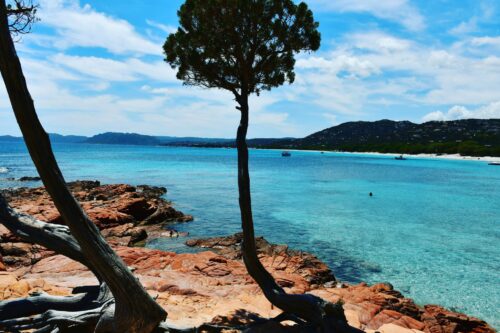
In the south of the island, around Porto-Vecchio, beaches such as Palombaggia or Santa Giulia embody this very accessible and comfortable version of Corsica. The water is shallow, the sand is light, and the environment is perfectly suited for a carefree day. Everything is designed to allow a simple, smooth, almost immediate experience. This is an area that works very well for a relaxing stay, where you can easily return every day without complex logistics.
But reducing Corsica to these beaches would be a mistake. Moving away from these very busy areas, the coastline changes in nature. Access sometimes becomes longer, more technical, but the experience becomes more powerful. Saleccia beach perfectly illustrates this other facet. It does not give itself easily: you have to earn it, either by track or by sea. This difficulty of access acts as a natural filter, and once there, you discover an almost untouched environment, where the feeling of space becomes immediately dominant. Between these two extremes, beaches such as Rondinara offer an interesting balance. The bay is naturally sheltered, the water often remains calm, and the environment maintains a feeling of preserved nature while remaining accessible. It is typically the kind of place that helps you understand the diversity of the Corsican coastline.
Cities that set the rhythm of the journey
Bonifacio: a city suspended between sky and sea
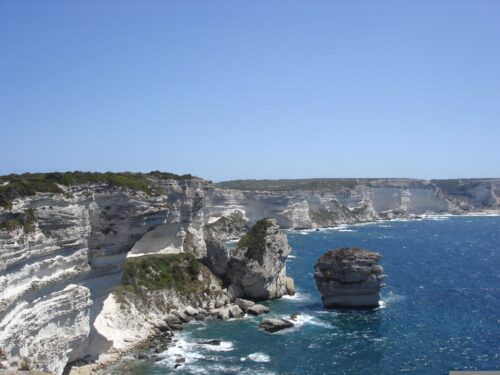
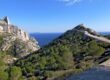
Bonifacio is often one of the first visual shocks of a trip to Corsica. The town is literally built on white limestone cliffs, overlooking the sea from an impressive height. This creates an immediate, almost theatrical impression upon arrival. But Bonifacio is not limited to its panorama. The historic center is dense, almost labyrinthine, with narrow streets that structure the visit. You move without transition from shaded passages to sudden openings over the sea, which gives a particular rhythm to the experience. Below, the harbor introduces another atmosphere, more lively and open. It is a place of passage, boat departures, but also a place where it is easy to linger. Bonifacio thus works on two very distinct levels, which strengthens its appeal in a Corsican itinerary.
Calvi: between citadel, beach and seaside life
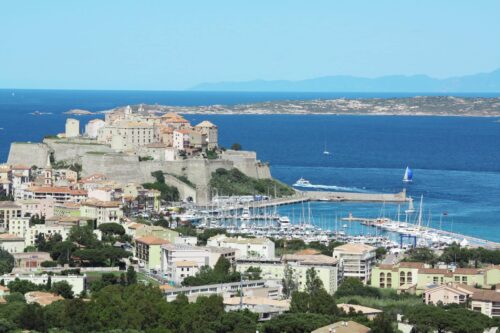
Calvi offers a different experience, more fluid and easier to live in on a daily basis. The town is organized around its citadel, visible from almost every point, which structures the space and serves as a permanent visual landmark. What makes Calvi particularly interesting is the continuity between spaces. The beach is within walking distance of the town center, allowing a natural transition from an urban moment to a seaside one. This proximity makes the stay very easy to organize, without transport constraints. The atmosphere is also more dynamic, especially in the evenings around the harbor. Calvi thus becomes a very practical base for exploring the northwest of the island, while maintaining daily comfort.
Corte: inland and more authentic Corsica
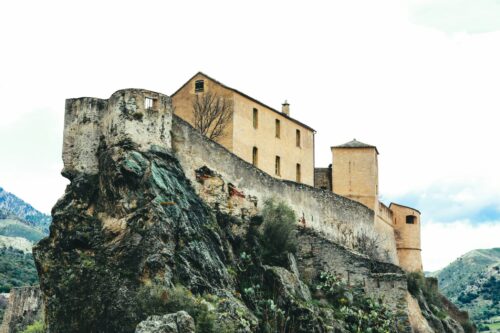
Corte marks a clear break in the Corsican landscape. Here, the sea completely disappears in favor of a dense and structured mountainous environment. The town, built on higher ground, still retains a citadel that recalls its historical importance. But today, its main role is geographical. It is located in the center of the island, making it a strategic point to radiate across different regions. Corte is also a gateway to a wilder Corsica. The valleys, rivers and hiking trails accessible around the town offer a much more nature-oriented experience. The atmosphere is calmer, less touristic, which strongly changes the overall perception of the island.
Sartène: a more traditional and slower Corsica
Sartène is often presented as a synthesis of traditional Corsica. Built in stone and clinging to the hillside, the town preserves an old layout that contrasts strongly with more developed coastal areas. Here, there is no spectacular site as such, but a general atmosphere. The pace is slower, the spaces more compact, and the whole gives a feeling of continuity with an older Corsica, less transformed. It is a type of visit that works particularly well in a gradual discovery of the island, as a complement to more touristy areas.
Ajaccio: birthplace and main gateway
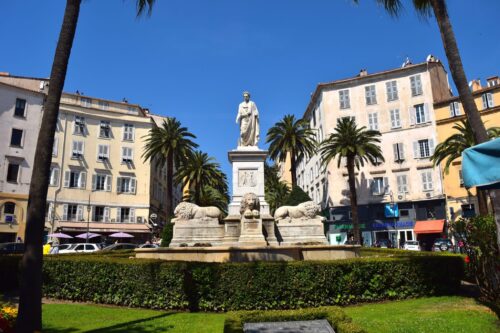
Ajaccio is often the first contact with Corsica for many travelers. Larger and more urban than the other cities, it plays the role of gateway and logistical base. The city has a pleasant historic center, an easily accessible seafront, and an important cultural dimension, especially around Napoleon. It is not necessarily the most spectacular destination on the island, but it remains a key step in an itinerary.
Simple, local cuisine rooted in the territory
Corsican cuisine naturally accompanies the journey, often without being planned in advance. It is discovered through villages, markets and meals taken on site. Charcuterie holds an important place, not only for its reputation, but especially because it is directly linked to local farming practices. It is not standardized, which explains its variations depending on producers and regions. Brocciu is another central element. Present in many recipes, it perfectly illustrates the culinary logic of the island, where the same product can be used in very different ways depending on seasons and traditions. More broadly, Corsican cuisine remains consistent with its environment. It does not seek to follow external trends but relies on what the territory actually produces. This authenticity is an integral part of the travel experience.
Corsica, far more than just a simple destination
Corsica cannot be reduced to a sequence of places to visit or a single postcard image. What makes it strong is precisely the permanent balance between very different, sometimes even opposite worlds. In just a few days, you can move from a very touristy coastline to isolated beaches, from a lively port city to a silent mountain village, or from a spectacular coastal road to much quieter inland valleys. This diversity is what makes a trip to Corsica special, but also demanding in terms of preparation. The island is not efficiently discovered by trying to see everything, but by slowing down, choosing coherent areas and leaving space for travel time and unexpected moments. The more carefully the itinerary is designed, the smoother and more enjoyable the experience becomes.