
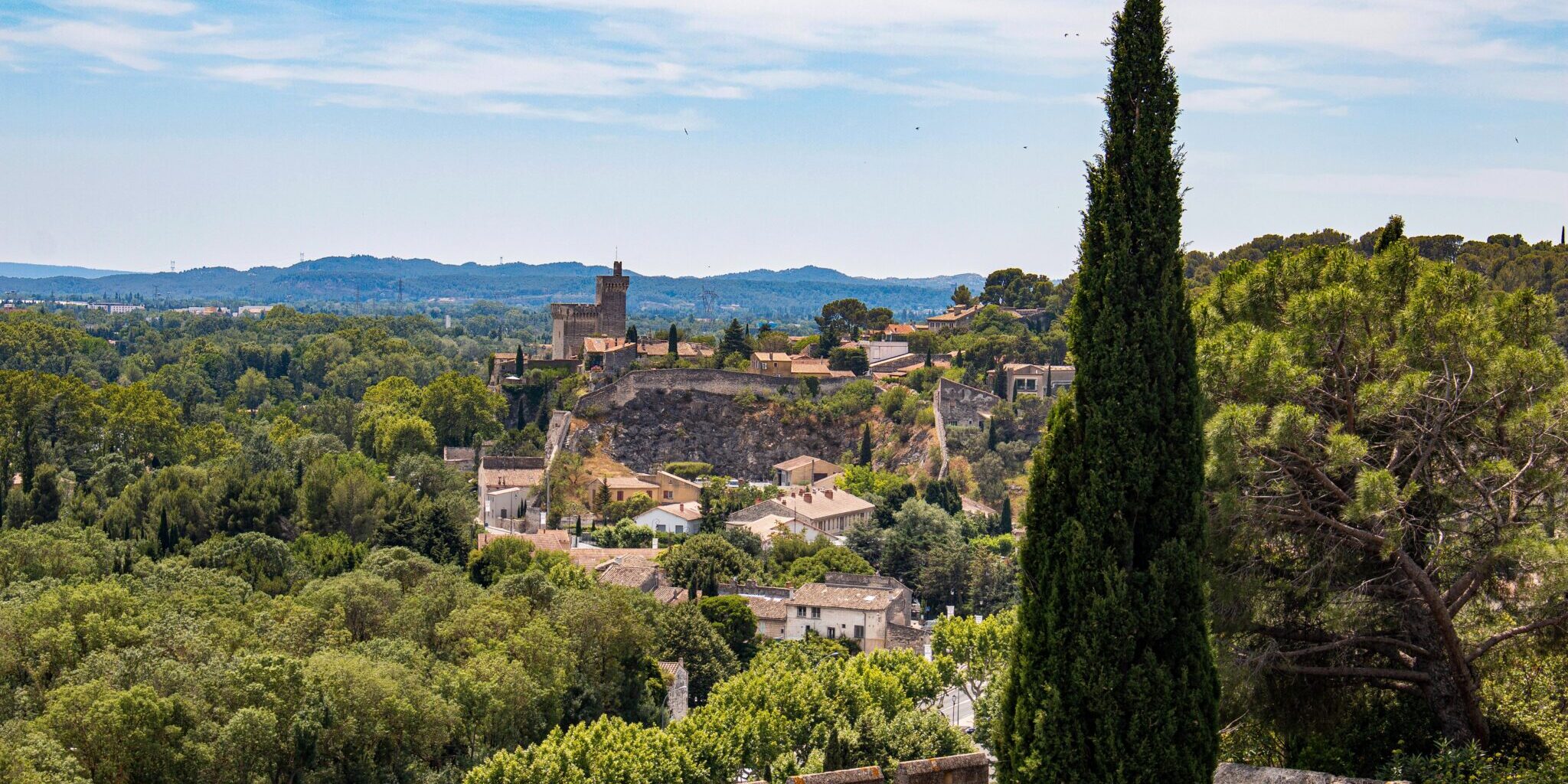
Provence is not simply a region in the south of France. It is a territory rich in history, a space shaped by civilizations, landscapes, and a light so distinctive that it has transformed the way the world is painted. From Roman antiquity to modern artists, including the popes of Avignon and agricultural villages, Provence is a condensed version of southern France in everything that is most alive, contrasting, and sensory.
There are ancient cities, papal cities, water villages, lavender plateaus, spectacular canyons, and hills covered with pine trees. But above all, there is an atmosphere. That of late afternoons when the heat gently fades, when cicadas become the permanent soundtrack of summer, and when stones take on an almost unreal golden hue.
Arles: Entering Provence through history and art
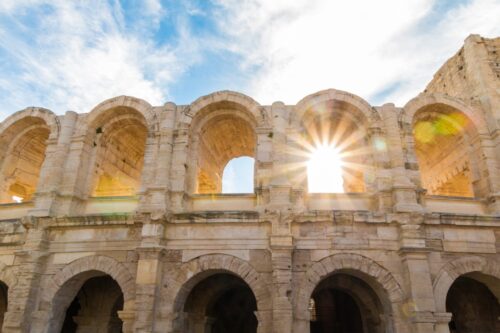
The journey can begin in Arles, a city where one literally walks through two thousand years of history. Upon arrival, one must climb into the Roman arenas, still perfectly preserved, then descend into the narrow streets to reach the ancient theater where one can still imagine the performances of antiquity.
Continuing the walk, one can follow a Van Gogh trail, leading to Place du Forum and the famous café that inspired The Night Café. Even today, it is possible to sit on the terrace and rediscover the atmosphere of the paintings. To extend the experience, the Vincent Van Gogh Foundation offers contemporary exhibitions that engage in dialogue with his legacy. From Arles, it is pleasant to end the day walking along the banks of the Rhône at sunset, when the light turns almost orange and the city seems to float between past and present.
Aix-en-Provence: Slowing down and strolling through Provençal elegance
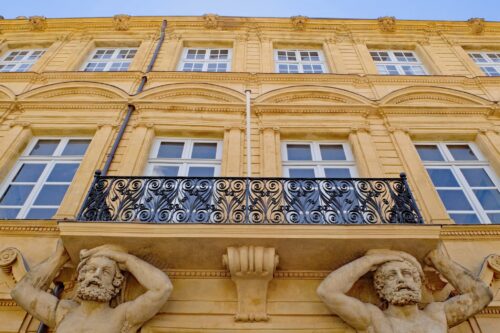
Heading northwest, one arrives in Aix-en-Provence, where the pace immediately changes. Here, one should begin by walking slowly along the Cours Mirabeau, stopping at a shaded terrace and observing local life.
In the morning, the most authentic experience is to visit a Provençal market, such as the one at Place Richelme, to taste local products: olives, goat cheese, melons, or calissons. Then, it is interesting to leave the city center and head up to Cézanne’s studio, still intact, to understand how he observed light and landscapes. The afternoon can continue toward the Sainte-Victoire mountain. A hike or simply a viewpoint allows one to see the landscape he painted dozens of times. It is a stage where Provence becomes more contemplative, almost silent.
Avignon: Experiencing history and spectacle
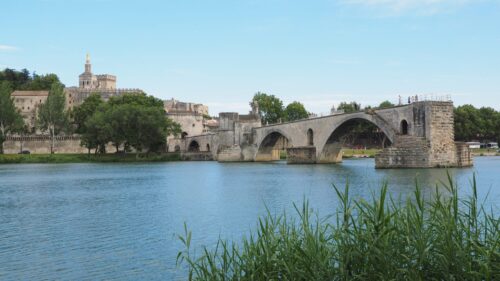
Continuing north, Avignon is an essential stop. The first thing to do is visit the Palais des Papes, taking time to walk through its vast halls and silent cloisters. It is here that one understands the political and religious importance of the city in the Middle Ages. Then, the walk can continue toward the Pont Saint-Bénézet, descending to the Rhône riverbanks to see the city from the shore. The ramparts, accessible on foot, allow visitors to walk around the old city from above. If the trip takes place in summer, it is almost essential to experience at least one evening of the Avignon Festival. One can attend a performance in an inner courtyard or simply walk through the streets where artists perform in the open air. The atmosphere then becomes completely different, almost electric.
Valensole: Driving through lavender fields
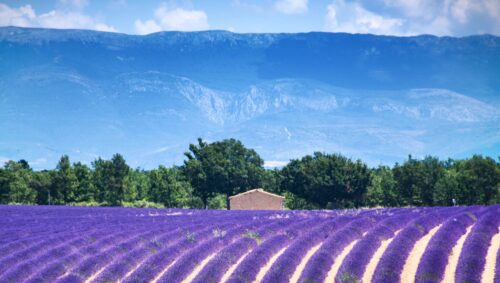
Descending toward the Alpes-de-Haute-Provence, one enters another dimension with the Valensole plateau. Here, the main experience is simply driving along small roads that cross the fields. Between late June and mid-July, one must stop regularly to walk among the rows of lavender, smell the scents, and observe the bees. A particularly powerful moment is sunrise, when mist still floats over the fields. Nearby, it is interesting to visit a lavender distillery to understand how the plant is transformed into essential oil used in the perfume industry of Grasse. This gives a more concrete dimension to this highly aesthetic landscape.
Gorges du Verdon: Exploring a spectacular canyon
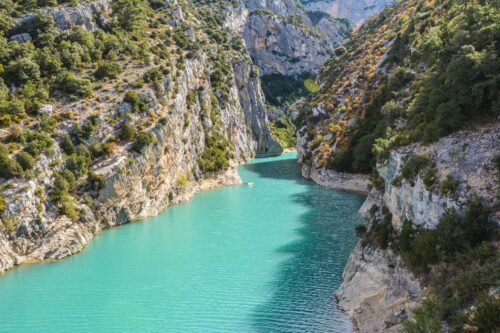
Continuing eastward, one reaches the Gorges du Verdon. Here, the journey becomes more active. A day can begin with the Route des Crêtes, stopping at various viewpoints such as the Point Sublime to admire the depth of the canyon. Then it is possible to descend to Lake Sainte-Croix to rent a kayak and enter the gorge from the water. Navigating between the cliffs offers a different, much more immersive perspective. For hiking enthusiasts, the Blanc-Martel trail allows one to cross part of the gorge on foot, with paths carved into the rock and impressive views over the river below.
L’Isle-sur-la-Sorgue: Ending gently along the water
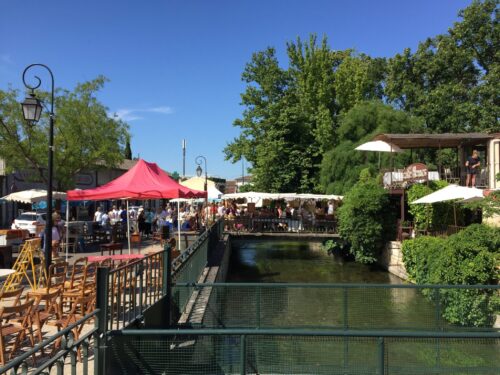
To finish this journey, L’Isle-sur-la-Sorgue offers a completely different atmosphere. Here, one should walk without a specific destination along the canals, observing the still-functioning waterwheels. On Sunday morning, the market transforms the entire town into a huge space for antiques and local products. It is the perfect moment to hunt for an old object or simply enjoy the atmosphere.
The simplest but also most pleasant experience remains sitting by the water in a café and watching the reflections of the houses in the Sorgue.
A Provence experienced as an itinerary
This journey shows that Provence is not a succession of isolated places but a continuous trip. One moves from the arenas of Arles to the fountains of Aix, from the popes of Avignon to the lavender fields of Valensole, from the cliffs of the Verdon to the canals of L’Isle-sur-la-Sorgue, as if each stage were a chapter of the same story.
It is a region that is not consumed but slowly traveled, taking time to stop, taste, walk, and observe. And perhaps that is, in the end, the true Provençal experience: a succession of simple moments that become unforgettable.






1 Comment